Things to do in Fes for luxury-minded travellers
Immersive things to do in Fes around the medina’s living history
Walking into Fes feels like stepping into a layered manuscript of Morocco. One of the most rewarding ways to begin is to enter the medina through a historic gate and let the city unfold slowly. This gentle introduction suits travellers who value depth, privacy, and curated comfort more than rushing between landmarks.
The UNESCO listed Fes el Bali, often written as Fes Bali, is the oldest part of the city and a masterpiece of urban history. Within this medina of more than 9 400 alleys, you will find artisans, caravanserais, and hidden gardens that pair beautifully with a stay in a refined guest palace or premium hotel. When you plan your trip, check that your property offers guided access into medina Fes, because a knowledgeable host can open doors to private homes, workshops, and rooftops that you would never find alone.
Many visitors ask whether Fes or Fez Morocco is the correct spelling, and both forms are used for the same city. Upscale riads and boutique hotels in the city usually employ local guides who know every bab, or gate, and every quiet shortcut through the medina. This level of service works especially well for guests who want to enjoy the highlights in comfort while avoiding the most crowded streets and aggressive touts.
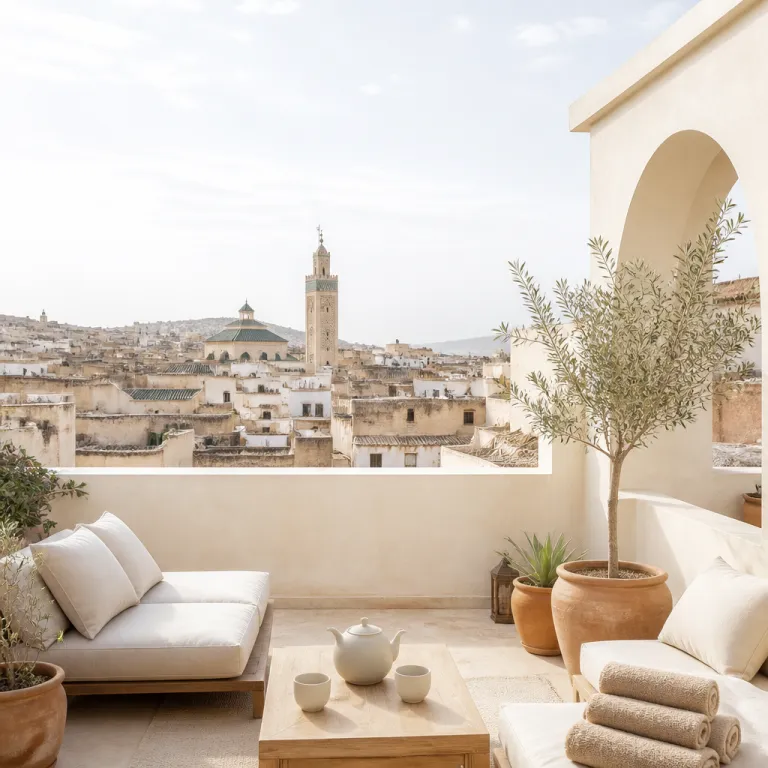
Among the most atmospheric experiences Fes offers is an evening stroll through softly lit lanes near the Blue Gate, also known as Bab Boujeloud. From here, you can walk towards the heart of Fes Bali, then return to your hotel for a rooftop dinner overlooking the medina. Choosing a room with a terrace will reward you with beautiful views of minarets, hills, and the distant Marinid Tombs; on clear evenings, you may even hear the call to prayer ripple across the valley.
Architectural highlights and spiritual heritage near luxury hotels
Many of the most meaningful things to do in Fes revolve around its religious and scholarly heritage. A well planned day can combine a visit to a madrasa, a museum, and a quiet garden, all within walking distance of premium hotels in medina Fes. For travellers designing a longer trip, pairing Fes with the Middle Atlas on a curated solo week between Fes and the Middle Atlas creates a refined contrast between dense city life and mountain air.
The Bou Inania Madrasa, often written as Bou Inania or madrasa Bou Inania, is one of the best preserved theological schools in Morocco. Its carved cedar, zellij tilework, and marble courtyard make it a major stop for architecture lovers who want to check a classic monument off their list. It usually opens daily from late morning to late afternoon, with a modest entrance fee payable in cash at the door, so staying nearby allows you to visit early, when the light is soft, the entrance queue is short, and the site is still quiet enough to hear the fountain.
Close by, the Attarine Madrasa, sometimes called the Attarine madrasa, offers another intimate look at Fes Morocco as a centre of learning. Many guests combine both madrasas in a single morning, then return to their hotel for a leisurely lunch beside a courtyard fountain. When you book, ask whether your concierge can arrange a private guide who explains how each madrasa once connected to the wider university network of the city and how students lived and studied there.
The Kairaouine Mosque and its historic university complex remain spiritual anchors for the city Fes. Non Muslims cannot enter the prayer hall, yet you can still admire the beautiful courtyard and green tiled roofs from nearby alleys or selected rooftop terraces. A thoughtful hotel team will know exactly which terraces to choose, so you can enjoy these views in comfort with a well brewed mint tea and clear explanations of the site’s religious etiquette.
Craft traditions, tanneries, and curated shopping for discerning guests
For many visitors, the most vivid activities in Fes involve its craft traditions and legendary tannery quarter. The Chouara Tannery, sometimes written as Chouara tannery, is the most famous leather production site in Fez Morocco and a place where centuries old methods are still used. Luxury travellers often prefer to experience this intense area with a private guide who manages access, timing, and comfort, especially on hot days when the smells are stronger.
From shaded balconies above the tannery, you will see stone vats filled with natural dyes, and you will understand why this is one of the best spots for photographers. The smell can be strong, yet many shops offer sprigs of mint, and a well briefed guide will lead you to the cleanest, most reputable terraces. After your visit, you can return to your hotel to check your purchases, compare prices with your concierge, and ensure the leather quality matches your expectations.
Beyond the tannery, the Nejjarine Museum of Wooden Arts and Crafts, housed in a restored caravanserai, offers a calmer perspective on the city’s artisans. This museum pairs beautifully with a stay in a historic palace style property, where carved doors and painted ceilings echo the exhibits you have just seen. For luxury minded travellers, combining the museum with a stop at Dar Batha or the nearby Batha Museum creates a well rounded cultural afternoon that still leaves time for a spa treatment or hammam.
Many premium hotels in Fes now curate private shopping experiences that focus on quality rather than quantity. With the help of a concierge, you can meet master artisans in medina Fes, commission custom pieces, and then relax in your suite while everything is packed and shipped. For more ideas tailored to high end stays, you can consult this guide to unforgettable attractions in Fez for luxury minded travellers before finalising your itinerary and confirming deposits.
Palaces, gardens, and serene spaces near luxury and premium hotels
Another set of refined things to do in Fes centres on its palatial architecture and green spaces. While the Royal Palace of Fes remains closed to the public, its monumental brass doors and surrounding walls still rank among the best scenes to photograph in the city. Many high end hotels are located within a short drive, allowing you to visit early in the morning when the light is gentle, the square is quiet, and tour buses have not yet arrived.
From the Royal Palace, you can continue towards the Blue Gate, or Bab Boujeloud, which marks a symbolic entrance into Fes Bali. This bab, or gate, with its blue and green tiles, offers a beautiful frame for the medina and is often included in curated walking routes arranged by luxury properties. Your concierge will usually pair this walk with a stop at a refined café terrace, where you can watch the flow of the city Fes while enjoying a slow coffee and a plate of local pastries.
When the medina feels intense, the Jnan Sbil gardens provide a welcome pause and are easily integrated into a premium itinerary. These landscaped gardens, with their palms, fountains, and shaded paths, sit between the old and new parts of Fez Morocco and are ideal for a late afternoon stroll. Many luxury hotels recommend Jnan Sbil as a place to reset between a morning museum visit and an evening dinner reservation, especially for guests who are sensitive to noise.
Close to the gardens, Dar Batha and the Batha Museum offer another layer of history, with collections of ceramics, woodwork, and textiles. Combining Dar Batha with Jnan Sbil creates a gentle circuit that balances culture and calm, which works especially well for guests sensitive to crowds. When you plan your trip, ask your hotel to map these stops on a custom route so you can move efficiently while still leaving space for spontaneous moments, such as a tea break in a quiet riad courtyard.
Viewpoints, day trips, and how luxury hotels shape your experience
Some of the most memorable things to do in Fes involve leaving the medina for wider views. The Marinid Tombs, set on a hill above the city, offer one of the best sunset panoramas over Fes Bali and the surrounding valleys. Many premium hotels can arrange a private transfer and driver, so you arrive at the right time with minimal effort and avoid the steepest part of the climb.
From this vantage point, you will see how the medina, newer districts, and distant hills form a single beautiful tapestry. Photographers often regard the Marinid Tombs as one of the best scenes in Fez Morocco, especially when the last light catches the minarets and the roofs of the university quarter. After sunset, your driver will return you to your hotel, where a late dinner on the terrace feels particularly rewarding after the dusty walk back from the viewpoint.
Beyond the city, a carefully planned day trip can add variety to your stay without sacrificing comfort. Many luxury travellers choose a day trip to the holy town of Moulay Idriss or to nearby wine estates and olive groves, using Fes as a refined base. Your concierge will usually check road conditions, restaurant options, and timing, ensuring that every element of the trip runs well and that you return before late evening traffic.
For guests comparing different Moroccan cities, it can be helpful to read an elegant travel guide to the best things to do in Marrakech before finalising bookings. This allows you to decide whether to split your time between Fes and another city or to focus deeply on one destination. Either way, a luxury or premium hotel in Fes will act as your anchor, shaping how you experience every gate, palace, and viewpoint from arrival to departure.
Practical guidance for luxury stays and respectful visits in Fes
Planning refined things to do in Fes becomes easier when you understand local rhythms and logistics. The city is generally safe for visitors, and official guidance confirms that “Yes, Fes is generally safe, but stay aware of surroundings.” Luxury hotels enhance this baseline by offering secure transfers, vetted guides, and clear advice on where to walk at different times of day, especially if you are returning from dinner on foot.
Spring and autumn are widely regarded as the best seasons for a trip, and local tourism authorities state that “Spring and autumn offer pleasant weather for exploration.” During these months, you can comfortably visit the Chouara tannery, the Bou Inania Madrasa, and the Attarine Madrasa without the extremes of summer heat. High end properties often adjust their suggested itineraries by season, recommending earlier starts in warmer periods and longer evening strolls when temperatures fall.
Respectful behaviour is essential when you visit religious and historic sites in Fez Morocco. Official guidance clarifies that “Are non-Muslims allowed in Kairaouine Mosque? Non-Muslims can view the mosque's exterior but not enter.” Luxury concierges will remind you to dress modestly, ask before photographing people, and move gently through narrow alleys, which helps maintain a good relationship between visitors and residents and keeps the atmosphere welcoming.
To make the most of your stay, use the tools and methods that experienced travellers rely on. Walking tours, guided visits, and self exploration supported by mobile navigation apps all work well in the dense fabric of medina Fes. When combined with the comfort of a premium hotel, these approaches ensure that the best things in the city remain accessible, enjoyable, and aligned with your expectations of service and privacy.
Key figures and structured insights for planning your Fes itinerary
- The historic core of Fes el Bali covers about 280 hectares, according to UNESCO, which means that even a focused list of things to do in Fes requires careful planning and realistic daily goals.
- City guides estimate that medina Fes contains around 9 400 alleys, so staying in a luxury hotel with reliable wayfinding support and trusted local guides significantly improves navigation and reduces stress.
- The Kairaouine Mosque and its associated university were founded in the ninth century, making this complex one of the oldest continuously operating academic institutions in the world and a central reference point for any cultural trip.
- Tourism boards report a steady rise in interest for cultural tourism in Morocco, and Fes benefits directly from this trend through increased demand for guided walking tours and high end heritage accommodation.
- Local operators note growing participation in craft workshops around the tannery and madrasa quarters, which aligns well with luxury travellers’ desire for curated, hands on experiences rather than quick sightseeing stops.
FAQ about luxury travel and historic sites in Fes
Is Fes safe for luxury travellers staying near the medina ?
Fes is generally considered safe for visitors, and high end hotels add another layer of security through private transfers, vetted guides, and clear local advice. As in any city, you should stay aware of your surroundings, avoid displaying valuables, and follow your concierge’s recommendations about where to walk after dark.
What is the best time of year to visit Fes for sightseeing ?
Spring and autumn offer the most pleasant temperatures for exploring medina Fes, the Chouara tannery, and sites such as Bou Inania Madrasa or the Marinid Tombs. During these seasons, luxury hotels can schedule rooftop breakfasts, garden walks, and day trips with minimal disruption from heat or rain.
How many days should I plan in Fes to see the main historic sites ?
A stay of three to four nights in the city Fes allows enough time to visit key places such as Fes Bali, the tanneries, major madrasas, Jnan Sbil gardens, and the main museum collections. With five nights or more, you can add a day trip to Moulay Idriss or the Middle Atlas while still enjoying relaxed afternoons at your hotel.
Can non Muslims visit the Kairaouine Mosque and university complex ?
Non Muslims cannot enter the prayer hall of the Kairaouine Mosque, yet they can admire the beautiful courtyard and roofs from selected alleys and rooftops nearby. Many luxury hotels arrange guided walks that include these viewpoints, ensuring respectful distances and clear explanations of the site’s religious importance.
Do I need a guide to explore medina Fes, or can I go alone ?
You can explore medina Fes independently, especially with modern navigation apps, yet a licensed local guide adds context, safety, and efficient routing between sites. Luxury and premium hotels usually recommend combining at least one guided half day with periods of self exploration, which balances freedom with expert insight.