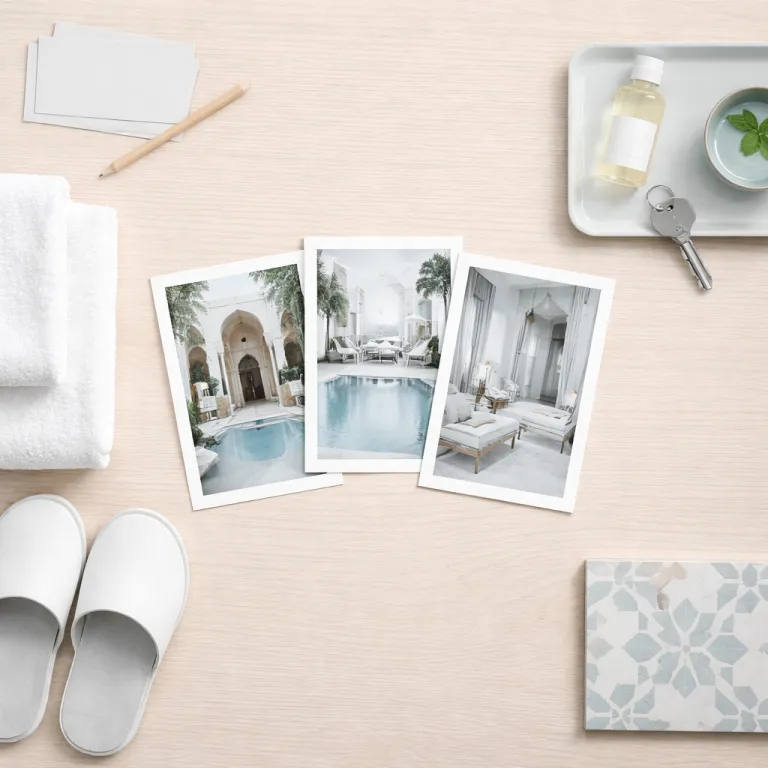
Choosing the Marrakech region for your stay
Heat shimmers above the pink ramparts, the call to prayer drifts over the medina, and somewhere behind a carved wooden door a quiet courtyard pool waits. The Marrakech region is not one place but several overlapping worlds, and choosing the right one will shape your entire stay. For many guests, the question is not whether to come, but where exactly to sleep between the old city, the palm groves, and the first folds of the Atlas Mountains.
Inside the medina, a traditional riad with its inward-facing rooms and central patio offers immersion. Step outside and you are in the souks within a minute walk, following the alleys from Derb Dabachi towards Jemaa el-Fna square. In the modern districts of Guéliz and Hivernage, a Marrakech hotel feels closer to a resort Marrakech experience, with larger swimming pool areas, expansive living areas, and a more international atmosphere.
Beyond the city limits, low-slung properties on the road to Ourika or towards Tameslohte trade proximity for space. Here, nights are darker, the air cooler, and the view of the Atlas Mountains unobstructed at dawn. This is where a longer stay Marrakech makes sense for guests who want to balance medina intensity with days by an outdoor swimming pool and quiet gardens.
To help you choose, below is a curated selection of notable places to stay in each area, with typical price bands, approximate transfer times, and notes on pools and family suitability. Details are indicative and can change, but they give a useful framework when comparing options.
Medina and riads: for immersion in old Marrakech
Wooden doors on Rue Riad Zitoun el Kedim reveal another Marrakech entirely. A riad medina stay means rooms arranged around a courtyard, often with a plunge pool or small swimming pool at the centre and a roof terrace above the tiled galleries. Sound from the street drops away; you hear only the fountain and the clink of tea glasses. For many travelers, this is the most evocative way to stay in Marrakesh.
These traditional houses suit guests who want to walk to the main sights. From many medina accommodations, you can reach Jemaa el-Fna square in about a 10 to 15 minute walk, and a similar stroll takes you to the Koutoubia Mosque, often described simply as “the Koutoubia”. A riad dar close to the spice square or the Mouassine district lets you slip back to your room for a rest between forays into the souks.
The trade-off is space and privacy. Rooms in the oldest houses can be compact, with thick walls and small windows, and sound travels around the patio when other guests return late at night. Before you book, look carefully at room descriptions, the number of rooms in the property, whether there is a real pool or only a decorative basin, and how many floors you will need to climb to reach your room or roof terrace.
Example riads in the medina
Riad Yasmine – Boutique riad with a photogenic courtyard pool and eight rooms; mid-range to upper mid-range; around 15 minutes on foot to Jemaa el-Fna; plunge-style pool suits relaxed dips more than serious swimming; better for couples and older families than for toddlers.
La Maison Arabe – Historic riad hotel with a small garden pool and spa; upper mid-range; about 10 minutes by taxi to the Koutoubia and the main square; compact but atmospheric rooms; family-friendly with interconnecting options and cooking classes.
Riad BE Marrakech – Design-focused guest house with two patios and a decorative basin-style pool; mid-range; roughly 20 minutes’ walk to Jemaa el-Fna; more suited to adults and style-conscious couples than to families needing large outdoor areas.
Hivernage and Guéliz: contemporary hotels with pools and spas
Palms line Avenue Mohammed VI, cars glide past, and the medina’s chaos feels suddenly distant. In Hivernage and neighbouring Guéliz, the hotel landscape shifts to larger properties with generous swimming pool decks, landscaped gardens, and full spa facilities. This is where you find the archetypal spa hotel in Marrakech, designed for guests who want to alternate hammam rituals with long afternoons by the pool.
Rooms here tend to be larger than in the medina, often with a defined living area, balconies, and more separation between guest rooms. Many hotels in this part of Marrakesh are within a short drive of both the airport and the old city, which makes them a good choice for a first stay Marrakech when you are unsure how much medina intensity you really want. You can take a taxi to the Koutoubia, walk Koutoubia gardens at sunset, then retreat to a quieter night.
When comparing options, look beyond the label of “Marrakech hotel” or “resort Marrakech”. Pay attention to the layout of the pool, whether there are adults-only areas, the scale of the spa, and how many restaurants are on site. Some properties feel like self-contained seasons resort enclaves, ideal if you plan to spend most of your time on property, while others are better as a base for exploring the city and returning only to sleep.
Example hotels in Hivernage and Guéliz
Four Seasons Resort Marrakech – Luxury resort-style hotel with extensive gardens, multiple outdoor swimming pools, and a large spa; high-end; about 10 minutes by taxi to the Koutoubia; very family-friendly with kids’ club and spacious suites.
Sofitel Marrakech Lounge & Spa – Contemporary spa hotel with a big central pool and several restaurants; upper mid-range to luxury; roughly 15 minutes’ walk or a short taxi ride to Jemaa el-Fna; good for couples and groups who want nightlife nearby.
Radisson Blu Hotel, Marrakech Carré Eden – Modern city hotel in Guéliz with a sizeable outdoor pool and shopping centre access; mid-range; around 10 to 15 minutes by taxi to the medina; practical for families and business travelers who value easy parking and larger rooms.
Palmeraie and countryside: space, gardens, and Atlas views
Olive groves thin out into palm clusters as you leave the centre along Route de Fès. The Palmeraie and the wider countryside around Marrakech offer a different rhythm, with low-rise hotels and guest houses set in large gardens, often with more than one pool and wide lawns. Nights are quieter here, and the sky feels bigger, especially on the edge of the desert plateau.
These accommodations suit guests who value space, privacy, and a resort-like feel over being able to walk everywhere. A stay in the Palmeraie or on the road to the Atlas Mountains works particularly well if you plan to combine city days with excursions to the Ourika Valley or to viewpoints above Asni. You wake with mountain silhouettes on the horizon, then drive 20 to 30 minutes back into the medina for lunch.
Before booking in the outskirts, check transfer options and journey times at different hours of the day. Ask how often the hotel runs shuttles into central Marrakech, and whether taxis can easily find the property at night. For some travelers, the distance is a welcome filter that keeps the medina at arm’s length; for others, it becomes a frustration after the third return trip for dinner in town.
Example hotels in the Palmeraie and countryside
Palais Namaskar – Sprawling luxury retreat with mirror-like pools, private villas, and landscaped gardens; high-end; usually 25 to 30 minutes by car to Jemaa el-Fna; tranquil and romantic, with family options but a strong focus on privacy and calm.
Les Deux Tours – Characterful Palmeraie hotel with lush gardens, two main pools, and shaded terraces; upper mid-range; about 20 minutes by taxi to the medina; relaxed atmosphere suits couples and families who want space without full seclusion.
Fellah Hotel – Design-led countryside property on the road to Ourika with a large outdoor swimming pool and cultural programming; mid-range; roughly 25 minutes’ drive to the Koutoubia; family-friendly, with open grounds and a more bohemian feel.
What to look for in rooms, pools, and spas
Tile patterns, ceiling height, and light matter as much as square metres in Marrakech. In a traditional riad, the most atmospheric room is not always the most practical; a ground-floor room beside the pool feels close to the action, while an upper-floor room can be quieter but warmer. In larger hotels, corner rooms or suites with a separate living area often justify the extra step up when you plan to spend more time in the room.
Pools deserve scrutiny. Some medina properties advertise a pool that is really a plunge basin, beautiful but not suitable for real swimming. If daily laps are non-negotiable, focus on hotels with a full-length swimming pool or outdoor swimming area, often found in Hivernage, Guéliz, or the Palmeraie. For spa-focused guests, look for a true spa hotel with a traditional hammam, treatment rooms, and a calm relaxation space rather than just a massage menu.
Restaurant options also shape your stay. A hotel with a serious restaurant allows you to dine in after a long day in the souks, while still tasting refined versions of local dishes. When you read descriptions or informal reviews, pay attention to how breakfast is described, whether there are quiet corners for a late-night drink, and if the property layout allows some separation between dining areas and guest rooms.
For families, check whether pools have shallow sections, if extra beds or interconnecting rooms are available, and how children’s noise carries in courtyards. Couples may prefer adults-only wings, spa packages, or suites with private terraces, especially in resort-style hotels on the edge of the city.
Location, atmosphere, and how to match them to your trip
Distance in Marrakech is measured less in kilometres than in how you feel when you step outside your door. A riad near Riad Laarous places you in the northern medina, close to the spice market and a short taxi ride from the Jardin Majorelle and the Musée Yves Saint Laurent, often simply called the Saint Laurent museum. A stay closer to Riad Zitoun brings you nearer to Jemaa el-Fna square and the southern palaces.
For a first visit focused on the medina, staying inside the walls or just outside Bab Doukkala works well. You can walk to the main sights, return to your room for a rest in the late afternoon, then head back out for the night. Repeat visitors, or guests planning longer stays, often prefer the balance of a hotel in Hivernage or the Palmeraie, where they can book day trips to the Atlas Mountains and still return to a calm poolside lounger before dinner.
When you compare hotels, think in terms of atmosphere rather than star ratings alone. Do you want the layered quiet of a riad courtyard, the social energy of a larger pool scene, or the retreat-like feel of a countryside property where the loudest sound at night is the wind in the palms ? Matching this to your own travel rhythm is the single most important decision you will make when choosing where to stay in the Marrakech region.
As you narrow down options, sketch a simple map of your likely days: how often you will go into the medina, how much time you want by the pool, and whether you are travelling as a couple, family, or group of friends. The right hotel in the right neighbourhood turns those lines into an easy, memorable stay rather than a series of long taxi rides.
FAQ
Is the medina the best area to stay in Marrakech for a first visit ?
For a first visit focused on history, markets, and atmosphere, staying in the medina or just outside the walls is usually the best choice. You can walk to Jemaa el-Fna square, the Koutoubia, and many museums, and experience the traditional riad architecture from the inside. The trade-off is more noise, narrower streets, and smaller rooms than in modern districts, so it suits guests who value immersion over space.
How many nights should I book in the Marrakech region ?
A stay of three to four nights allows you to explore the medina, spend time by the pool, and fit in at least one excursion. With five to seven nights, you can split your time between a riad in the medina and a hotel in the Palmeraie or near the Atlas Mountains, experiencing two very different sides of the region. Shorter stays are possible, but you will have to choose between depth in the city and time to unwind.
What is the difference between staying in Hivernage and in the Palmeraie ?
Hivernage sits close to the city centre, with larger hotels, established spas, and easy access to both the medina and Guéliz. It works well if you want a contemporary hotel with a substantial swimming pool and several restaurants, but still plan to go into town daily. The Palmeraie and countryside properties are further out, offering more space, gardens, and a retreat-like feel, better suited to guests who prioritise calm and do not mind using taxis or shuttles.
Are riads suitable for families or groups ?
Some riads work very well for families or groups, especially when you can reserve several rooms around the same patio or even book the entire house. However, layouts can be vertical, with steep stairs and open galleries, and pools are often small and unfenced, which may not suit very young children. Larger hotels in Hivernage, Guéliz, or the Palmeraie usually offer more family-friendly facilities, such as bigger pools and more flexible room configurations.
What should I check before booking a hotel in Marrakech ?
Before you book, confirm the exact location, typical transfer times to the medina, and whether you can walk to key sights such as Jemaa el-Fna or the Koutoubia. Look closely at room descriptions and photos to understand size, layout, and whether there is a real pool or just a decorative basin. Finally, consider the on-site restaurant and spa facilities, as well as the overall atmosphere, to ensure they match the way you like to spend your days and nights.