Where to stay in the Ouarzazate region of Morocco
Is the Ouarzazate region in Morocco right for your stay?
Stone ramparts, dry light, and the sudden green of palm groves make Ouarzazate feel like a threshold rather than a destination. This is the classic “Door of the Desert” in Morocco, where the last foothills of the High Atlas mountains fall away towards the Sahara desert and the Drâa Valley. If you are choosing a hotel in the Ouarzazate region, you are really choosing how close you want to be to that frontier and how you want to experience the surrounding landscapes.
Travelers come here for three main reasons: to explore ancient kasbah architecture, to use the city as a base for desert tours, or to break the journey between Marrakech and the deep south. For each of these, the right hotel style is different. Some will prefer a riad in town with easy access to the city center, others a ksar-style retreat in a nearby valley, and some a simple, budget-friendly guesthouse close to the main road.
As a rule of thumb, Ouarzazate suits travelers who value space, silence, and landscape over nightlife. It is not a medina city like Fès or Marrakech. It is a place for long views towards the Atlas, for slow breakfasts in a garden, for evenings when the only sound is the call to prayer and the wind over the roofs. If that sounds like your pace, the region can be an excellent base for a two- or three-night stay combined with a Sahara excursion.
Understanding the geography: city, oasis, and ksar landscapes
From the main Avenue Mohammed V, where low-rise buildings and cafés line the road, you are rarely more than a few minutes’ walk from wide, open views. The city center is compact, with hotels scattered between the administrative quarter, the palm groves near the Ouarzazate riverbed, and the road that leads towards Aït Benhaddou. Each micro-area offers a different experience, and transfer times are short: most places in town are 5–10 minutes apart by taxi.
Staying near the central square by the post office puts you close to everyday life: small patisseries, local restaurants serving Moroccan cuisine, and easy access to taxis for day trips. Here, riads in Ouarzazate tend to be more intimate, with inward-facing courtyards and a traditional layout that suits travelers who like to walk out in the evening. Expect fewer dramatic desert views, more contact with local rhythm and quick access to services such as ATMs, pharmacies, and small grocery shops.
Move a short drive out towards the palm groves or along the road to the dam and the mood changes. Properties become more horizontal, more ksar-like, echoing the fortified villages of the region. You trade immediate access to the city center for gardens, swimming pools, and wider views of the Atlas mountains. For many, that is a welcome exchange, especially in spring and autumn when daytime temperatures are pleasant and evenings are cool enough to sit outside.
Hotel styles in Ouarzazate: from riad intimacy to ksar retreats
Inside the city, the classic choice is between a small riad and a larger hotel built in a traditional kasbah style. Riads in Ouarzazate usually offer fewer rooms, often arranged around a central patio or garden, with carved plaster, zellige tiles, and the soft echo of a fountain. They suit couples, solo travelers, and anyone who values a quiet, enclosed atmosphere over resort-style facilities, and they often include breakfast and simple home-cooked dinners on request.
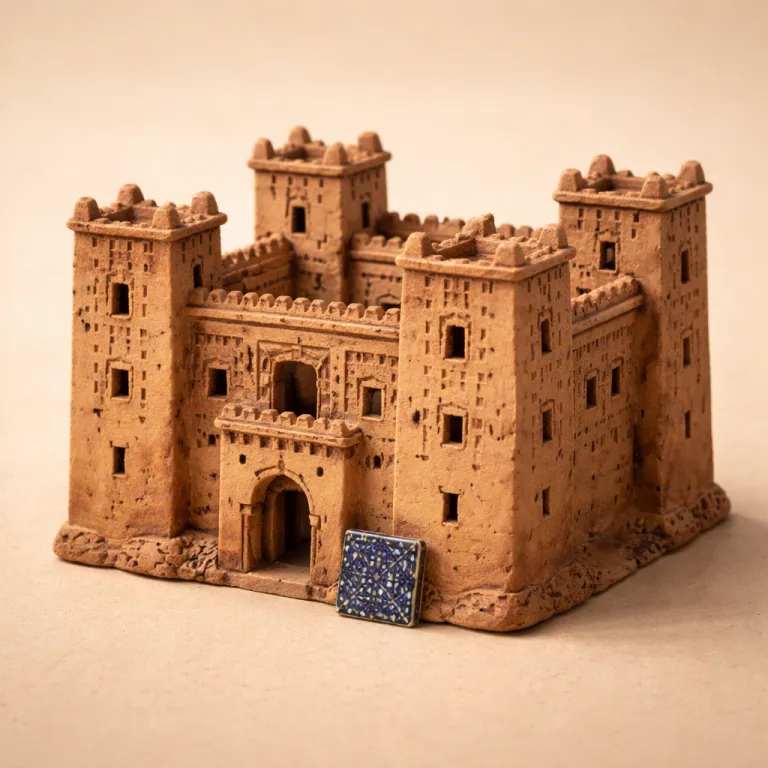
Larger hotels in Ouarzazate lean into the region’s architecture. Think thick pisé walls, corner towers, and corridors that recall an ancient kasbah, but with contemporary comforts. These properties are better for travelers who want more structured services, larger swimming pools, and the possibility of joining organized excursions to the Sahara desert or the Drâa Valley directly from the lobby. Many mid-range and family-friendly hotels also provide on-site parking, which is useful if you are driving from Marrakech over the Tizi n’Tichka pass.
Outside town, in the direction of Aït Benhaddou or along the valleys, ksar-inspired retreats and traditional Berber guesthouses offer a different rhythm. Here, the experience is about landscape immersion: terraces with views of the Atlas, mud-brick silhouettes at sunset, and the feeling of sleeping in a living fragment of southern Moroccan history. Families and small groups often appreciate the extra space and the sense of seclusion, while photographers enjoy the soft morning and evening light over the palm groves.
To make the options more concrete, here are a few examples across different budgets (approximate prices are per night for a double room and can vary by season):
- Dar Chamaa (Ouarzazate city) – Mid-range boutique hotel with palm garden and pool, about 10 minutes by taxi from the city center and 15 minutes from Ouarzazate Airport. Pros: calm residential setting, good value, Atlas views. Cons: not walkable to many restaurants. Typical rates: around €60–€90.
- Le Berbère Palace (Ouarzazate city) – Upscale resort-style property often used by film crews, roughly 5 minutes’ drive from the central square and 10 minutes from the airport. Pros: large pool, extensive facilities, comfortable for families and groups. Cons: higher prices, more international than intimate. Typical rates: around €150–€250.
- Hotel La Perle du Sud (Avenue Mohammed V) – Central, mid-range city hotel on the main avenue, about 5 minutes from the bus station and 10 minutes from the airport. Pros: convenient location, easy access to taxis and restaurants. Cons: more functional than atmospheric. Typical rates: around €40–€70.
- Hotel Amlal (budget option in town) – Simple, budget-friendly accommodation near the main road, roughly 5–10 minutes’ walk from central Ouarzazate. Pros: low prices, practical for one-night stops. Cons: basic rooms, limited character. Typical rates: around €25–€40.
- Kasbah Aït Benhaddou (near the UNESCO site) – Traditional-style guesthouses and small hotels line the approach to the ksar, usually 30–40 minutes by car from Ouarzazate and about 45 minutes from the airport. Pros: sunrise and sunset over the mud-brick village, immersive setting. Cons: fewer independent restaurants, quieter evenings. Typical rates: around €40–€100 depending on comfort level.
- Kasbah Ellouze (Tamdaght, near Aït Benhaddou) – Restored kasbah guesthouse in a small village a short drive from the famous ksar, about 35–45 minutes from Ouarzazate. Pros: characterful rooms, rural atmosphere, views over palm groves. Cons: you rely mostly on in-house dining. Typical rates: around €70–€120.
- Kasbah Azul (Agdz, Drâa Valley) – Eco-minded guesthouse in a palm oasis roughly 70–80 minutes’ drive from Ouarzazate, often combined with a longer circuit towards the Sahara. Pros: lush gardens, strong sense of place. Cons: farther from the airport and city services. Typical rates: around €60–€110.
Rooms, atmosphere, and what to expect inside
Rooms in the Ouarzazate region tend to be generous in size compared with those in the historic medinas of Morocco. Even in more traditional properties, you can expect solid masonry walls, small windows to keep out the heat, and thick textiles that echo Berber motifs. The best rooms balance this traditional character with discreet modern comfort rather than trying to imitate a museum, and many include air conditioning and private bathrooms as standard.
In riad-style houses, upper-floor rooms often feel more private and may offer partial views towards the city or the surrounding hills, while ground-floor rooms open directly onto the patio or garden. If you are sensitive to noise, avoid rooms immediately off the main courtyard, where breakfast and evening tea are usually served. The trade-off is simple: more atmosphere versus more quiet, and in smaller guesthouses you can usually request a specific room category when you book.
In ksar and kasbah-inspired hotels, ask yourself what matters most: a terrace with views of the Atlas mountains, direct access to the swimming pool, or the cool seclusion of a room tucked into the inner part of the building. Corner suites sometimes capture both morning and evening light, which can transform the experience in a region where the sun is a central character. If you plan to visit in July or August, prioritize good insulation and effective air conditioning over decorative details.
Location choices: city base, Aït Benhaddou, and the valleys
Staying in central Ouarzazate works best if you plan to move around a lot. You are well placed for early departures towards the Sahara desert, the High Atlas, or the Drâa Valley, and you can return in the evening to a choice of restaurants along Avenue El Mansour Eddahbi. This is the pragmatic option for travelers who see their hotel as a base rather than a retreat, and who want straightforward access to taxis, car-rental agencies, and the small Ouarzazate airport.
Choosing a ksar-style property near Aït Benhaddou, roughly 30 km to the northwest, changes the equation. Here, the focus is on the ancient ksar itself, a UNESCO-listed stronghold of earthen architecture. You wake up to views of mud-brick towers, walk through narrow alleys in the late afternoon, and feel the desert light shift on the façades. It is less about city life, more about immersion in a single, powerful landscape, and many travelers combine one night here with one or two nights in Ouarzazate town.
Further along the valleys leading towards the south, small traditional Berber guesthouses and ksour offer an even quieter stay. These suit travelers who are comfortable being a longer drive from Ouarzazate’s services in exchange for palm groves, night skies, and a closer connection to rural life. For some, that distance is a luxury in itself; for others, it feels too remote, especially if they prefer to dine out in different restaurants each night.
Experiences from your hotel: desert tours, cuisine, and slow days
Most quality hotels in the Ouarzazate region are set up to act as gateways to the surrounding landscapes. From a city hotel, you can arrange a day tour to Aït Benhaddou, a longer excursion that pushes on towards the Sahara desert, or a loop through the Drâa Valley with its long ribbon of palm oases. The advantage of staying in town is simple logistics and a wider choice of departure times, especially if you are joining a shared group tour rather than a private driver.
In more remote ksar-style properties, the experience often shifts from movement to contemplation. Mornings might start with breakfast under olive trees in the garden, followed by a slow walk through nearby villages built in the same earth tones as your hotel. Afternoons are for the swimming pool, a book in the shade, or watching the light change on the High Atlas ridges in the distance. Many guests plan at least one completely unstructured day to recover from the winding road between Marrakech and Ouarzazate.
Food is a central part of the experience. Many properties serve Moroccan cuisine that reflects the south: long-simmered tagines, lentil and barley dishes, and oranges dusted with cinnamon. If you care about gastronomy, pay attention to whether the hotel emphasizes its kitchen and uses local produce. A well-run dining room can turn a simple overnight stop into a stay worth lingering over, and some hotels will prepare picnic lunches for day trips into the valleys or towards the desert dunes.
Who the Ouarzazate region suits best
Travelers who thrive here tend to share a few traits. They are curious about architecture, drawn to wide open spaces, and comfortable with quiet evenings. If your ideal Morocco is a rooftop bar in Casablanca or a late-night café in Marrakech, Ouarzazate will feel restrained. If you dream of ksar silhouettes at dusk and the long road towards the desert, it will feel exactly right, especially if you enjoy slow travel and scenic drives.
Couples often choose riads in Ouarzazate for their intimacy and sense of enclosure, while families and small groups gravitate towards larger hotels with gardens and pools where children can unwind after long drives. Photographers, hikers, and anyone planning a multi-day desert tour use the region as a strategic base, balancing access to the Sahara with the relative comfort of a well-equipped hotel. Budget-conscious travelers also appreciate the range of mid-range guesthouses compared with more expensive desert camps.
In the end, the decision is less about a single “best” property and more about matching your own travel rhythm to the right setting: city center practicality, ksar immersion near Aït Benhaddou, or valley seclusion on the edge of the Drâa. Choose that first, then refine by style, atmosphere, and the kind of memories you want to bring back from this part of Morocco. A simple two- or three-night stay can easily expand once you factor in rest days, photography stops, and the temptation to linger by the pool.
Is Ouarzazate a good base for visiting the Sahara desert?
Yes. Ouarzazate is one of the most practical bases in Morocco for reaching the Sahara desert, especially if you are coming from Marrakech. The city sits at a crossroads, with roads leading towards the dunes via the Drâa Valley and other southern routes, and many hotels are used to organizing or coordinating desert tours. You will not sleep directly in the dunes here, but you gain better infrastructure, a wider choice of accommodation styles, and the possibility to combine desert excursions with visits to Aït Benhaddou and the surrounding valleys, often in a two- or three-day circuit.
What types of accommodation are available in the Ouarzazate region?
You can choose between several main categories:
- Riad-style guesthouses in Ouarzazate city – smaller, more intimate, often with patios and traditional decor.
- Kasbah and ksar-inspired hotels – larger properties echoing fortress architecture, usually with pools and gardens.
- Contemporary hotels on main avenues – practical bases close to restaurants, taxis, and everyday services.
- Traditional Berber guesthouses and ksour in the valleys – rural, landscape-focused stays with strong local character.
The choice is less about category labels and more about whether you prefer urban convenience or rural seclusion, and whether you prioritize price, character, or facilities.
How many nights should I plan in Ouarzazate?
As a planning guideline:
- 2 nights – enough for Ouarzazate itself and Aït Benhaddou, with one full day for local exploration.
- 3 nights – better if you want to add a Sahara desert excursion or a loop through the Drâa Valley.
- 4+ nights – ideal for slow travel, photography, or building in rest days between long drives.
If you intend to use the city as a base for a desert tour or a longer circuit through nearby regions, three nights or more give you a more comfortable rhythm, especially outside the hottest summer months.
Is the Ouarzazate region suitable for families?
For many families, the answer is yes, provided you enjoy nature and quieter evenings. In practical terms:
- Many hotels in and around Ouarzazate offer spacious rooms or family suites, gardens, and swimming pools.
- Day trips to Aït Benhaddou, local kasbahs, and viewpoints over the Atlas mountains provide varied activities without excessive travel times.
- Families who need playgrounds, theme parks, or dense urban entertainment may find the area too calm.
Those seeking space, landscape, and a slower pace usually find it rewarding, particularly in spring and autumn when daytime temperatures are moderate.
When should I book my hotel in Ouarzazate?
Booking ahead is advisable during peak travel periods in Morocco, especially in spring and autumn when temperatures are more comfortable for exploring the desert and the High Atlas. The region sees increased demand from travelers using Ouarzazate as a staging point for tours, which can limit last-minute availability in the most characterful properties. If you have a strong preference for a particular style of stay, such as a riad in the city center or a ksar-style retreat near Aït Benhaddou, planning in advance gives you a better chance of securing the atmosphere you want and aligning your dates with desert tour departures.