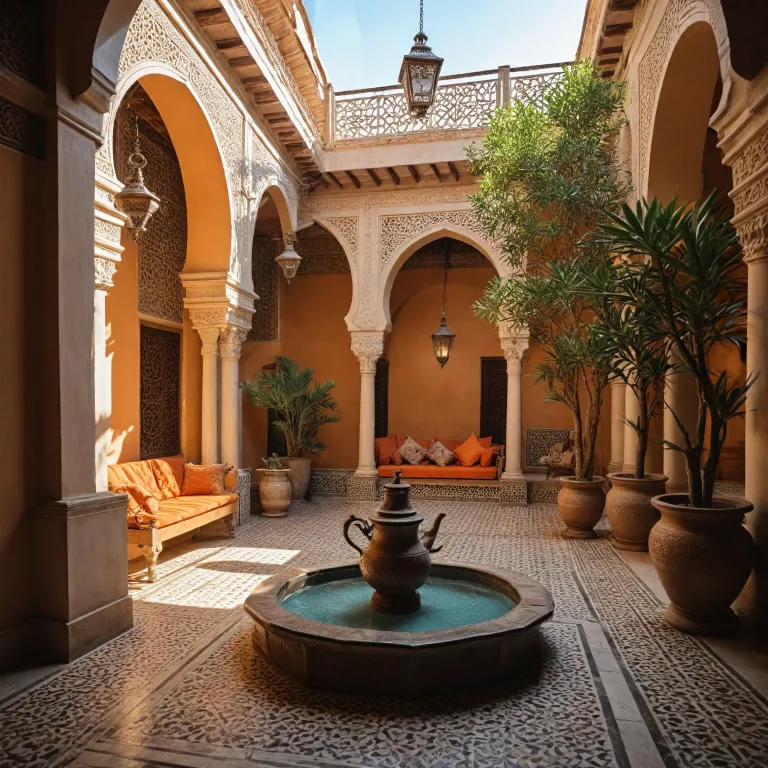
Riad in Morocco: an intimate alternative to traditional hotels
Choosing a riad in Morocco means entering a world shaped around privacy and calm. These traditional Moroccan houses were once owned by wealthy citizens such as merchants and courtiers, and their inward focused architecture still defines the most refined stays. Today many of these moroccan houses have become a luxurious riad hotel experience that rivals the best hotels Morocco can offer.
A classic riad in Morocco is organized around a central courtyard that acts as the heart of the home. This courtyard often includes a small fountain, plunge pool, or riad jardin with citrus trees that perfume the air and soften the light. The architecture follows Islamic principles, turning windows and life toward the interior rather than the street, which makes staying riad particularly serene even in the busiest medina.
Most riads are located inside the medina, the historic walled quarter of cities such as Marrakech and Fès. In medina Marrakech and the wider north Africa region, these enclosed spaces protect guests from heat, dust, and noise while keeping them close to the city’s most atmospheric streets. When you book riad accommodation, you are also booking direct access to souks, monuments, and hidden cafés just a few minutes’ walk away.
Modern travelers now choose a riad in Morocco as a premium alternative to a conventional hotel. Many properties have been restored with exquisite traditional Moroccan materials such as hand cut zellij tiles, tadelakt plaster, and carved cedar wood. The result is a moroccan riad that blends heritage architecture with discreet comfort, ideal for guests who value character as much as service during their stay.
From medina alleys to tranquil courtyards: where riads in Marrakech shine
Marrakech remains the city where the riad in Morocco concept is most fully expressed. Within the dense medina Marrakech, more than five hundred riads marrakech have been converted into guesthouses and high end hotels, many of them hidden behind unmarked wooden doors. Once inside, the contrast between the lively alleys and the cool courtyard is immediate and unforgettable.
A typical marrakech riad rises over two or three levels around a paved courtyard, with arcades on the ground floor and galleries above. The ground floor often hosts salons, a dining area, and sometimes a plunge pool set within a lush riad garden. Upper floors hold the rooms, and a roof terrace crowns the house, offering views over the medina, the Koutoubia minaret, and the distant Atlas mountains.
When you book room options in a riad marrakech, you will notice that each room riad is usually unique. Some rooms open directly onto the courtyard, ideal for guests who prefer easy access and fewer stairs, while others sit higher for more privacy and sweeping views. Many travelers consider the roof terrace the best place to enjoy breakfast or sunset, especially in a riad jardin setting with potted olive trees and lanterns.
Because streets are narrow and often closed to cars, staying riad in the medina requires a little planning. Your riad hotel can usually arrange a porter to meet you at a nearby gate and guide you through the alleys to the door. This small logistical step is rewarded with a stay riad experience that feels both intimate and deeply connected to the life of Marrakech.
Architecture, interior design, and the art of the Moroccan riad
The architecture of a riad in Morocco is not only beautiful, it is also highly functional. Thick walls, shaded arcades, and the central courtyard help regulate temperature, keeping interiors cool in summer and comfortable in winter. This inward looking design also ensures privacy, which was essential for the families who originally lived in these moroccan houses.
Traditional Moroccan architecture emphasizes craftsmanship, and you will see this in almost every riad hotel. Hand carved cedar ceilings, painted wooden doors, and intricate plasterwork frame the rooms and corridors, while zellij mosaics add colour to floors and fountains. Many riads marrakech commission local artisans to restore or recreate these details, supporting heritage skills across north Africa.
Interior design in a luxury riad marrakech often blends traditional moroccan elements with contemporary comfort. Expect tadelakt bathrooms, soft textiles, and carefully chosen lighting that highlights the architecture without overwhelming it. Some properties feature a jardin secret style courtyard or riad jardin, where climbing plants and orange trees soften the geometry of the building.
Language and culture also shape the atmosphere when you stay riad. You may hear Arabic and French alongside English, and staff are usually happy to explain the meaning of motifs or inscriptions. This human connection, combined with thoughtful design, makes a riad in Morocco feel less like a standard hotel and more like a refined private residence where every detail has a story.
Rooms, service, and what to expect when you book a riad
When you book riad accommodation, it helps to understand how rooms are organized and serviced. Most riads offer a small number of rooms, which allows the staff to provide highly personalized attention throughout your stay. This intimacy is one reason many travelers consider a riad in Morocco among the best ways to experience local hospitality.
Room categories in a riad hotel usually range from compact doubles on the ground floor to spacious suites with private balconies or small salons. If you prefer quiet, ask to book room options away from the main courtyard, as sound can travel easily in these vertical spaces. Guests who enjoy being close to the water and greenery may instead choose a room riad that opens directly onto the courtyard or riad garden.
Service in a quality riad marrakech is typically warm, attentive, and discreet. The équipe may arrange airport transfers, restaurant reservations, and guided tours of the medina Marrakech, tailoring suggestions to your interests. Many properties can also organize private dinners in the courtyard or on the roof terrace, where traditional Moroccan dishes are served under the stars.
Breakfast is often included when you stay riad, featuring fresh bread, pastries, fruit, and local specialties such as amlou and mint tea. Some riads marrakech offer small spas or hammams, while others focus on calm communal spaces like a jardin secret corner or shaded roof terrace. Whatever the facilities, the combination of architecture, service, and scale ensures that a riad in Morocco feels both luxurious and genuinely personal.
How to choose the best riad in Morocco for your trip
Selecting the best riad in Morocco depends on your priorities, whether design, location, or level of service. Start by deciding if you want to stay inside the medina, where atmosphere is strongest, or in quieter districts just beyond the walls. In cities such as Marrakech and Fès, medina based riads offer the most immersive experience but may involve more walking and fewer direct vehicle transfers.
When you book riad stays online, pay close attention to room descriptions and floor plans. If mobility is a concern, request a room riad on the ground floor, as many staircases are narrow and steep. Guests seeking views and sunbathing space may prefer upper level rooms with easy access to the roof terrace, especially in a riad marrakech where sunsets over the medina are spectacular.
Design and atmosphere also matter when choosing where to stay riad. Some properties highlight minimalist lines and neutral tones, while others embrace richly coloured zellij, carved wood, and lush riad jardin planting. Reading guest feedback about staff, cleanliness, and noise levels will help you identify which riad hotel combines beauty with reliable day to day comfort.
Finally, consider how you plan to use your riad in Morocco during the trip. If you expect to spend long afternoons on site, look for features such as a pool in the courtyard, a shaded jardin secret corner, or a library. Travelers who will be out exploring most of the day may instead prioritize efficient service, flexible breakfast times, and easy access to key sights in medina Marrakech and beyond.
Practical tips for staying in riads across Morocco
Staying riad in the historic quarters of Morocco brings a few practical considerations that can enhance your comfort. Because medina streets are narrow and often pedestrian only, arrange your arrival in advance so staff can meet you at a nearby access point. Many riads marrakech and other cities provide porters to help with luggage along the final metres to the door.
Noise levels in the medina Marrakech can vary, especially during local celebrations or market days. If you are sensitive to sound, ask to book room options that face the interior courtyard rather than the street, and consider bringing light earplugs. Inside the riad in Morocco, however, thick walls and the calming presence of a riad garden or fountain usually create a surprisingly peaceful environment.
Respect for local culture will make your stay riad smoother and more rewarding. Dress modestly when walking through the medina, learn a few Arabic greetings, and be mindful when photographing people or private doorways. Within the riad hotel, staff appreciate clear communication about meal times, dietary needs, and any mobility issues so they can tailor service.
Finally, remember that a moroccan riad is often a restored historic building, not a standardized hotel block. Water pressure, stair layouts, and room shapes may differ from what you know at home, but these quirks are part of the charm. By approaching your riad in Morocco with flexibility and curiosity, you will experience a style of hospitality that has evolved over centuries in north Africa and continues to thrive today.
Key figures about riads and luxury stays in Morocco
- Number of riads in Marrakech converted into tourist accommodations : 500 riads.
- Average occupancy rate of riads in Morocco : 75 percent.
Essential questions about staying in a riad in Morocco
What is a riad?
What is a riad? A riad is a traditional Moroccan house or palace with an interior garden or courtyard, designed for privacy and protection from the elements. In the context of a riad in Morocco used as accommodation, this layout creates a calm, shaded heart to the property, around which all rooms and living spaces are organized. Guests benefit from natural ventilation, filtered light, and a strong sense of seclusion even in the centre of a busy medina.
Why do riads have interior courtyards?
Why do riads have interior courtyards? The interior courtyards provide a private, serene environment and help regulate temperature, keeping the living spaces cool. In a riad in Morocco, this courtyard often includes plants, water features, and seating areas that act as an open air salon for guests. The design reflects centuries of adaptation to climate and culture, making the courtyard both a practical cooling system and the aesthetic focus of the house.
Can tourists stay in riads?
Can tourists stay in riads? Yes, many riads have been restored and converted into guesthouses or hotels, offering tourists an authentic Moroccan accommodation experience. When you choose a riad in Morocco for your trip, you gain access to traditional architecture, personalized service, and locations that place you within walking distance of key historic and cultural sites. This combination has made riads a preferred option for travelers seeking character rich stays across Marrakech and other cities.
Trustful expert sources
- Moroccan Ministry of Tourism
- Moroccan National Tourism Office
- UNESCO World Heritage Centre