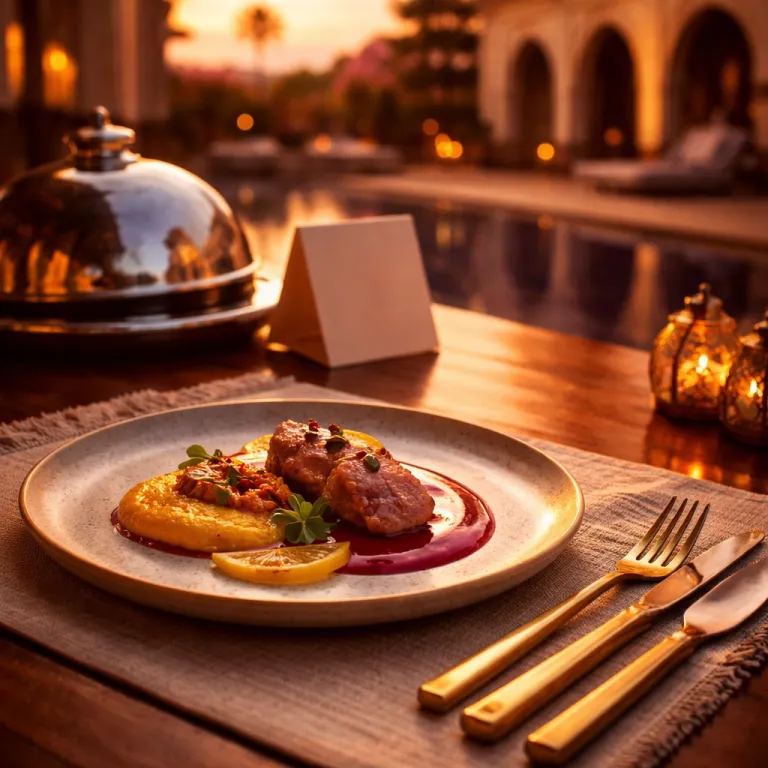
Why morocco hotel restaurants now set the culinary agenda
Walk into the right lobby in Marrakech and you are walking into the most ambitious kitchen in Morocco. Over the past decade, the sharpest cooking talent has migrated into Morocco’s luxury hotel dining rooms because large properties can offer stable salaries, long term contracts and serious investment in equipment. A 2023 STR and JLL overview of North African hospitality trends notes that food and beverage now accounts for roughly 30–40% of total revenue in many five star properties, which helps explain why hotel owners are willing to bankroll ambitious kitchens. For a business or leisure traveler who cares about food, that shift quietly changes how you should plan every reservation across Marrakech, Essaouira and beyond.
At Royal Mansour in Marrakech Morocco, La Grande Table Marocaine and La Grande Brasserie by Hélène Darroze show how hotel backed fine dining can operate at a level that standalone restaurants in the medina rarely match. These luxury hotels can import rare wine allocations, fund pastry laboratories and maintain a full brigade that executes both Moroccan and French menus at scale. Royal Mansour’s own dining overview highlights more than 50 kitchen and pastry staff dedicated to its signature restaurants, a scale that would be difficult for an independent venue to sustain year round. When you compare this to excellent independents such as Nomad or Le Trou au Mur, you feel the difference in depth of cellar, number of chefs and the ability to run parallel tasting menus for a full roof terrace on a busy night.
The structural advantage is simple and powerful for morocco hotel restaurants that sit inside a luxury hotel rather than on a side street near the palm trees. Room revenue, events and spa income subsidize the restaurant, so the chef can chase creativity instead of only table turnover. A 2022 Deloitte hospitality briefing on EMEA properties estimated that in many luxury hotels, less than half of a flagship restaurant’s operating costs need to be covered directly by food sales, which gives chefs unusual freedom to test new menus and techniques. That is why La Mamounia can sustain Le Marocain as a temple of refined Moroccan food while also running Italian and Asian concepts under the same Marrakech opulent roof. When you book a stay at La Mamounia or another of the best luxury hotels, you are effectively underwriting a culinary laboratory that would be hard to sustain as a single restaurant in the medina.
Outside Marrakech, the pattern repeats in different landscapes, from the Atlas Mountains to the Atlantic. At Kasbah Tamadot above the Asni valley, Kanoun Restaurant uses traditional Berber recipes, argan oil and mountain herbs in a way that would be risky for a small roadside restaurant with no room revenue. Down on the coast, The St. Regis La Bahia Blanca Resort and Alhoceima Bay Hotel can experiment with Mediterranean and African inspired food because their guests already fill the rooms and the poolside dining spaces. A 2023 STR and JLL snapshot of resort performance in North Africa indicates that guests at luxury Moroccan resorts dine on property an average of two to three times per stay, which further stabilizes restaurant income. For travelers comparing morocco hotel restaurants across Morocco, this means the best places for ambitious tasting menus are now more likely to be inside a riad style palace or a resort than on a standalone list of city restaurants.
Inside the new hierarchy of morocco hotel restaurants in Marrakech
Marrakech is where this hotel centric shift in food culture feels most intense. In the space between the medina and the palm trees of Hivernage, morocco hotel restaurants have become the city’s unofficial Michelin map. Royal Mansour, La Mamounia, Selman, Mandarin Oriental Marrakech and Le Méridien N'Fis now anchor a circuit of restaurants Marrakech diners treat as destinations rather than mere hotel amenities. Local food writers in publications such as TelQuel and Vogue Arabia increasingly frame these hotel dining rooms as the city’s reference points for fine dining, even in the absence of an official Michelin Guide for Morocco.
Royal Mansour’s La Grande Table Marocaine remains the reference point for fine dining rooted in Moroccan design and tradition, while La Grande Brasserie channels Hélène Darroze’s multi starred pedigree into a grand Parisian style room. In interviews around the restaurant’s opening, Darroze has described Royal Mansour as offering “the kind of support and resources chefs dream of,” a comment that underlines how hotel backing shapes what appears on the plate. La Mamounia’s Le Marocain, set apart in its own riad style pavilion, offers a different reading of Moroccan food, with refined tagines and couscous that feel ceremonial rather than rustic. Selman and Mandarin Oriental add their own interpretations, pairing rooftop views or stroll gardens with menus that move confidently between Moroccan, Mediterranean and Asian influences.
Independent restaurants in Marrakech Morocco have not disappeared from the conversation, but their role has shifted. Places such as Nomad, Plus 61 and Le Trou au Mur still deliver some of the best restaurants Marrakech experiences, especially for guests who want to feel the medina’s energy from a roof terrace at sunset. Their ambition is different though; they excel at relaxed dining, strong cocktails and smartly edited menus rather than the multi course fine dining theatre you find in the grand hotels. For a deeper dive into where the most ambitious chefs are cooking now, read this analysis of where Morocco’s most ambitious chefs are actually cooking before you finalize your reservation strategy.
Two independents still punch at hotel level on their own terms and deserve a place on any serious list of best places to eat in Marrakech. Plus 61 brings a sun drenched, produce driven approach that feels closer to Sydney than to the medina, while Le Trou au Mur digs into regional Moroccan recipes with a scholar’s curiosity and a chef’s precision. They cannot match the cellar depth of La Mamounia or the sheer staffing levels of Royal Mansour, yet they win on intimacy, local regulars and the feeling that you are part of the city rather than a guest of a palace. For many repeat visitors, a perfect itinerary now alternates between these independent addresses and the grand morocco hotel restaurants that define the city’s luxury dining scene.
The hidden risk of eating only in morocco hotel restaurants
There is a quiet downside to the rise of morocco hotel restaurants as the country’s main fine dining stage. Many of these restaurants are designed first for in house guests, which means the menus, pricing and even music can skew towards international expectations rather than local rhythms. Hotel general managers interviewed in 2022 by regional tourism boards openly acknowledge that a large share of their diners come from Europe and the Gulf, and that menus are often calibrated to those tastes. If you never step beyond the lobby, you risk leaving Morocco with a polished but incomplete sense of its food culture.
Some of the most atmospheric meals in Marrakech happen not under chandeliers but on a simple rooftop above the medina, where the call to prayer competes with the clatter of plates. A roof terrace restaurant such as Nomad, or a small riad dining room near Dar el Bacha, will serve you food that is less choreographed but more plugged into daily life. In these spaces, the wine list might be shorter and the service less rehearsed, yet the connection to the city feels stronger and the unforgettable moments often arrive unplanned.
The same tension appears along the coast in Essaouira Morocco, where resort based morocco hotel restaurants offer polished seafood platters while old town grills still smoke sardines over charcoal. At a luxury hotel on the waterfront, you will find fine glassware, a curated wine list and staff who can handle complex dietary requests very well. Step into the medina instead and you trade that comfort for the thrill of choosing your own fish, watching it hit the grill and eating it within minutes, with argan oil and lemon on the side.
For business travelers extending a stay, the temptation to default to the hotel restaurant every night is strong, especially when emails keep arriving at your protected work address and room service feels efficient. Resist that pull at least half the time and use the hotel concierge as a bridge into the city’s independent restaurants. Ask for a reservation at a traditional Berber table in the medina one night, then a modern Moroccan design focused restaurant with rooftop views the next, so your trip reflects both the polish of morocco hotel restaurants and the raw energy of local dining rooms.
How to plan a trip around morocco hotel restaurants without missing the city
Planning a high end trip around morocco hotel restaurants works best when you treat the hotel as your culinary base camp, not your entire world. Start by choosing a luxury hotel whose restaurants genuinely match your priorities, whether that is Moroccan food, Mediterranean seafood or plant forward menus. Then map out which nights you will eat in house and which evenings you will dedicate to the medina, the palm trees or even the Agafay Desert.
In Marrakech, one smart pattern is to reserve your first and last nights at your hotel restaurant, especially if you are staying somewhere like La Mamounia, Royal Mansour or Le Méridien N'Fis. The opening dinner lets you arrive, unpack and understand the kitchen’s style without navigating the medina after a flight, while the final meal becomes a controlled special occasion with no transport stress. In between, use lunches for exploratory dining in the medina or on a rooftop, then choose one evening for a transfer out towards the Agafay Desert or the foothills of the Atlas Mountains for a sunset meal.
Outside Marrakech, morocco hotel restaurants such as Kanoun at Kasbah Tamadot or the coastal venues at The St. Regis La Bahia Blanca Resort and Alhoceima Bay Hotel can anchor entire days. You might stroll gardens in the morning, swim in the pool under palm trees in the afternoon, then settle into a terrace for fine dining with long views and a serious wine list. When you want to balance value and experience across several cities, use a curated resource such as the guide to experience exceptional value with premium hotel deals in Morocco to align your room choices with the kind of restaurants you actually want to eat in.
Across Morocco, from El Minzah Hotel in Tangier to Le Diwan Hotel Rabat, Le Berbère Palace in Ouarzazate and Casablanca Marriott Hotel, the same pattern holds. These hotels run multiple restaurants that blend Moroccan and international food, often with one venue focused on fine dining and another on relaxed all day service. Booking data summarized in 2022 and 2023 by Deloitte and STR for upscale and luxury properties in North Africa shows that guests who choose hotels with strong restaurant reputations are significantly more likely to dine on property at least twice per stay, which reinforces the economic model that supports these ambitious kitchens. “Check restaurant availability in advance, explore local specialties, consider making reservations” is still the most practical advice for navigating morocco hotel restaurants, whether you are chasing rooftop views in Marrakech or a quiet corner table for a working dinner in Rabat.
Key figures shaping morocco hotel restaurants
- Royal Mansour in Marrakech operates at least four distinct restaurants, including La Grande Table Marocaine and La Grande Brasserie by Hélène Darroze, which positions the property as one of the densest clusters of fine dining outlets inside a single luxury hotel in Morocco (based on hotel restaurant listings from Royal Mansour).
- La Mamounia, Selman and Mandarin Oriental Marrakech each run several restaurants and bars, meaning a guest can realistically dine in house for three to five consecutive nights without repeating a venue, a level of choice that most independent riad restaurants in the medina cannot match (according to property dining overviews published by the hotels).
- Across Morocco, major properties such as El Minzah Hotel, Le Méridien N'Fis, Le Diwan Hotel Rabat, Le Berbère Palace and Casablanca Marriott Hotel all operate multiple restaurants, confirming that hotel groups now control a significant share of the country’s formal dining capacity (based on aggregated hotel dining information from their official sites).
- Booking data for upscale and luxury hotels in North Africa, summarized in 2022–2023 Deloitte and STR hospitality briefings, shows that travelers who choose properties with strong restaurant reputations are more likely to dine on property at least twice per stay, which reinforces the economic model that allows morocco hotel restaurants to recruit and retain high level culinary talent.