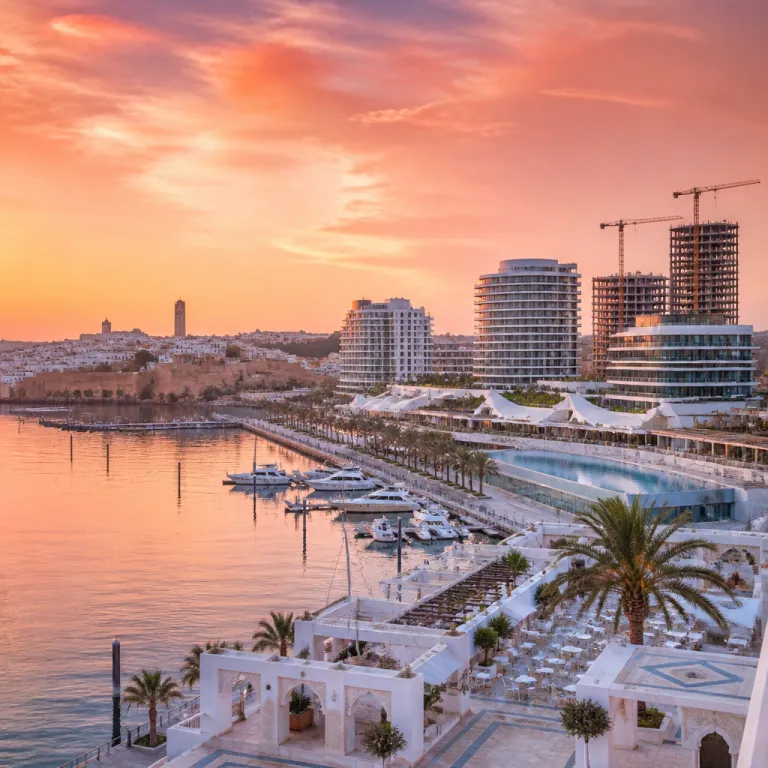
Rabat steps onto the luxury map for morocco hotel investment 2030
Rabat has quietly become the boardroom where Morocco’s hotel investment 2030 strategy is being negotiated. At the Four Seasons Hotel Rabat at Kasr Al Bahr, more than 600 hospitality professionals from over 300 companies met to test how far the country can stretch its tourism ambitions. For travelers, this is not abstract news; it is the moment when the capital shifts from administrative stopover to a fully fledged luxury hotel destination.
The GBB Investment Summit focused squarely on Morocco’s hospitality sector growth, with $3.475 billion in aggregate investment interest pledged toward new hotels and infrastructure, according to figures shared by organizers and government partners in their post-summit briefings. Officials from the Ministry of Tourism reiterated that attracting 26 million visitors and adding 150,000 hotel rooms by 2030, targets first detailed in the national tourism roadmap, is now a non negotiable objective for Morocco’s tourism strategy. That scale of hotel investment will reshape capacity in Rabat, Casablanca and the imperial cities, and it will influence where you find a Morocco hotel with the right balance of discretion and service.
Rabat’s position between the Atlantic and the Bouregreg estuary gives the city a calmer rhythm than Marrakech, yet the hospitality sector here is now central to the national tourism development roadmap. The summit’s partners, from the Ministry of Tourism to the Société Marocaine d’Ingénierie Touristique and the International Finance Corporation, framed Morocco’s hotel investment 2030 vision as a continental play, positioning the country as a North Africa hub for international brands. As one IFC representative noted during a plenary session, “Rabat is no longer just the political capital; it is becoming a reference point for institutional hospitality investment in North Africa.” For business leisure travelers, that means more hotels with serious meeting space, better airport to hotel infrastructure and a hospitality offer that finally matches the city’s diplomatic importance.
Morocco’s tourism sector is being calibrated around the upcoming FIFA World Cup, which the country will co host with Spain and Portugal, and the tournament deadline is compressing development timelines. The government’s target of 26 million visitors and more than 150,000 hotel rooms, set out in official tourism plans and reiterated in recent ministry communiqués, means that hotel expansion in Rabat is no longer optional but essential to national economy planning. As Morocco tourism becomes more global, the capital’s hotels will need to serve both regional guests from the Middle East and Africa and long term corporate travelers who expect consistent high end hospitality standards.
For travelers booking the next few years, the Morocco hotel investment 2030 agenda translates into a broader choice of properties in Rabat’s oceanfront districts and historic quarters. New international flags will sit alongside restored Moroccan palaces, and expanding hotel portfolios will compete on wellness, gastronomy and discreet service rather than just room count. If you want to understand how this shift is being narrated abroad, our guide on how to recommend Morocco honestly explains why the country’s hospitality story is now as much about infrastructure and investment as it is about sunsets over the medina.
What the World Cup timeline means for rates, rooms and leverage
The Morocco hotel investment 2030 roadmap is inseparable from the FIFA World Cup calendar, and that tournament pressure is already visible in construction schedules. With 75 hotel projects and 10,606 rooms in the pipeline across the country, and nearly two thirds already under construction according to recent sector briefings from the Ministry of Tourism and SMIT, the hospitality industry is racing to be ready ahead of the cup. For guests, that surge in hotel rooms will gradually shift the balance of power from fully booked properties to travelers who can negotiate.
As hotel capacity expands in Rabat, Casablanca, Tangier and the Marchica Nador corridor, the tourism sector will likely see more tiered pricing between peak match days and quieter weeks. In the early years of this cycle, when new hotels open into strong demand, rates in Morocco may stay firm, especially at the top end where international brands test how far the market will go. Over the longer term, once the multibillion dollar investment pipeline is fully online, competition between hotels should create more value for guests who book early, stay midweek or combine business and leisure.
For executives extending a Rabat trip into a weekend in Fès or Marrakech, the 2030 hotel investment program means more consistent standards across the country’s premium properties. You will see more loyalty aligned hotels where points matter, more integrated booking tools and better connectivity between city stays and coastal or desert extensions. Families planning to combine meetings in Rabat with a few days by the Atlantic can already use our guide to family friendly resorts and riads to identify properties that match both corporate and leisure expectations.
Behind the scenes, the tourism development push is also about tourism revenue and its impact on the wider economy, from construction jobs to long term hospitality careers. The Ministry of Tourism and its partners expect that increased foreign investment will support sustainable infrastructure, not just headline grabbing openings. For travelers, that should translate into better roads between Rabat and the imperial cities, more reliable airport transfers and a hospitality sector that can handle large events without sacrificing service.
Regional dynamics matter as well, because Morocco is competing with destinations such as Saudi Arabia and other Middle East hubs for both capital and visitors. International investors at the summit framed Morocco’s hotel investment 2030 ambitions as part of a wider Africa and global tourism play, where the country’s stability and geography give it an edge. If you are planning meetings that rotate between Europe, the Middle East and Africa, Rabat’s expanding hotel inventory will make it easier to keep the city on your calendar every year.
From Marchica to medinas : identity, design and the next wave of luxury
Beyond Rabat, the Morocco hotel investment 2030 story stretches along the Mediterranean, where the Marchica and Nador development zone is emerging as a new playground for investors. Here, hotel expansion is tied to large scale waterfront infrastructure, with plans for resorts, marinas and golf courses that plug the country more firmly into international leisure circuits. For travelers, that means future itineraries where a week might move from Rabat’s diplomatic salons to a quiet bay in the northeast without losing service continuity.
The tension is clear; the tourism sector needs rapid growth in hotel rooms, yet Moroccan architectural identity is one of the country’s strongest assets. Investors at the summit spoke about balancing global hospitality standards with local materials, crafts and urban forms, especially in imperial cities where the medina fabric is fragile. Our reporting from desert properties in the south, including the analysis of what luxury desert camps actually deliver, shows how quickly authenticity can be diluted when expansion outpaces context.
For guests, the practical question is how the 2030 hotel investment drive will shape the feel of a stay in Rabat, Fès or Meknès. In the best cases, expanding hotel portfolios will use capital to restore historic buildings, improve energy efficiency and train Moroccan teams to deliver quiet, precise service. In weaker projects, the rush ahead of the cup could produce generic properties that might meet global brand standards but miss the country’s deeper sense of place.
Travelers who care about design and culture should watch how new hotels in Rabat’s Kasbah des Oudayas area and along the Bouregreg waterfront integrate Moroccan craftsmanship into contemporary hospitality. The most interesting hotels will not only add to national hotel capacity but also contribute to tourism development by commissioning local artisans and chefs, anchoring the economy beyond a single year of events. When you read news about another USD billion in hospitality sector commitments, the real test will be whether those funds translate into spaces where the call to prayer, the Atlantic light and a perfectly poured mint tea still define the experience.
Looking ahead, Morocco’s position between Europe, Africa and the Middle East gives the country leverage in attracting both leisure and business travelers over the long term. If the Morocco hotel investment 2030 vision stays focused on quality, the result will be a network of hotels where an executive can land in Rabat for meetings, fly to Tangier for a night and then connect to a desert camp without dropping below a certain service baseline. For discerning guests, that is the quiet revolution behind the headline figure of several billion dollars in investment interest generated over a single Saturday in July at a waterfront hotel in the capital.