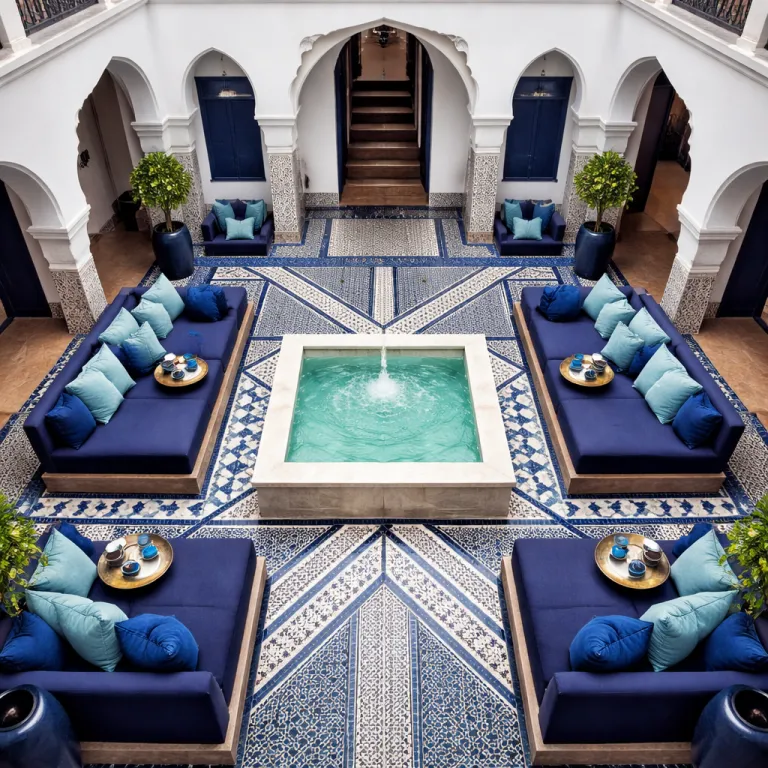
Understanding what a riad hotel truly is in Morocco
To understand what is a riad hotel, you first need to picture a traditional Moroccan house wrapped around a serene central courtyard. This inward looking architecture protects residents from the heat and noise of the medina while creating a cool, shaded world of tiles, carved plaster, and gentle fountains. When travellers ask what riad or what is a riad hotel, the answer is simple yet rich in meaning, because a riad is both a home and a symbol of Moroccan culture.
Historically, riads in Morocco were private residences for wealthy families, often located in the imperial cities such as Marrakech and Fès. Today many of these riads Morocco wide have been restored and converted into intimate hotels that preserve traditional Moroccan architecture while adding modern comfort. The average number of rooms in a riad is 10 rooms, which naturally encourages personalized service and a quieter atmosphere than large hotels.
At its core, a Moroccan riad is defined by its central courtyard, which may feature a small garden, a plunge pool, or a marble fountain. This courtyard or garden becomes the heart of the riad hotel, where guests relax after a day in the souks or before a day trip to the surrounding countryside. Riad owners work with local artisans to maintain traditional details, from zellige tiles to carved cedar, ensuring that each stay reflects authentic Moroccan culture.
When you compare riads and hotels, the difference lies in scale, intimacy, and layout. Standard hotels in Morocco usually face outward to the street, while riads face inward to the courtyard and offer a more private experience. This is why many travellers now choose staying riad for several days Marrakech or Fès, using these riads as calm bases for exploring the medina and planning longer desert days.
Key features that define a traditional Moroccan riad hotel
Several architectural elements help answer the question what is a riad hotel in a precise way. The most important is the central courtyard, often planted as a garden with orange trees, jasmine, or palms, and sometimes including a small pool. Around this courtyard, galleries on several levels lead to guest rooms, which keeps the atmosphere quiet even when the riad is fully booked for several days.
Traditional Moroccan design is visible everywhere, from hand cut tiles to intricate plasterwork and painted wooden ceilings. In many riads Morocco wide, you will also find mashrabiya style wooden screens that filter light and protect privacy, echoing the region’s Arabic and Andalusian heritage. These details make a Moroccan riad feel very different from standard hotels, even when both offer similar levels of comfort.
Because the average riad hotel has around 10 rooms, staff can provide highly personalized service throughout your stay. Many riad offers include airport transfers, tailor made tour days, and private dinners in the courtyard or on the roof terrace. Guests often comment that staying riad feels like being welcomed into a home rather than checking into anonymous hotels.
Location is another defining feature when you consider what riad means in practice. Most of the best riads are hidden inside the old medinas of Marrakech, Fès, and other imperial cities, reached through narrow lanes that suddenly open onto a quiet courtyard. This contrast between the busy streets outside and the calm garden inside is one of the most memorable parts of the experience, especially after a long day trip or a multi day tour Marrakech desert itinerary.
The cultural experience of staying in riads across Morocco
Asking what is a riad hotel also means asking how it connects you to Moroccan culture in daily life. Many riads in Morocco are still owned or managed by local families who share stories about the medina, the imperial cities, and the traditions behind the architecture. This human connection turns a simple hotel stay into a richer cultural experience over several days.
Language and hospitality play a central role in this experience, with staff often switching gracefully between Arabic, French, and English. Over breakfast in the central courtyard, you might learn about traditional Moroccan recipes, local customs, or the best riads to visit in other cities during a longer tour. These conversations help you understand how riads Morocco wide support local artisans and preserve heritage while welcoming guests from across North Africa and beyond.
Food is another highlight when staying riad, especially in Marrakech and Fès where culinary traditions are strong. Many riad offers include home cooked dinners served under the stars on the roof terrace after a busy day in the souks or a camel ride on the nearby palm groves. During longer tour days that include a Marrakech desert extension, guests often say that returning to the quiet courtyard and garden of their riad hotel feels like coming home.
“What is a riad hotel?” “A traditional Moroccan house with a central courtyard, now often used as a hotel.” This simple definition captures the essence, yet the lived reality is far more layered, shaped by architecture, culture, and the rhythm of your days. By the end of a three or four day stay, many travellers feel that the riad has become part of their personal story of Morocco.
Planning your stay in a riad hotel in Marrakech and Fès
When planning where to stay in Morocco, it helps to think in terms of days and experiences rather than only room categories. In Marrakech, many travellers choose three to five days Marrakech in a riad hotel, using the central courtyard as a peaceful base between visits to the souks, gardens, and museums. In Fès, a similar number of days allows you to explore the medina’s lanes while returning each evening to the calm of your Moroccan riad.
To decide what riad suits you best, consider location, size, and style. Some of the best riads are deep inside the medina, which offers immersion in local life but may require a short walk from the nearest car access after a long day trip. Others are closer to the city gates, which can be convenient if you are joining tour days that include a Marrakech desert extension or visits to nearby imperial cities.
Because riads Morocco wide are relatively small, it is wise to book several days in advance, especially in peak seasons. Check which riad offers are included in the rate, such as breakfast in the garden, airport transfers, or help arranging a camel ride during desert days. You should also confirm practical details like heating, air conditioning, and Wi Fi, since traditional architecture can make temperature control more complex than in modern hotels.
Finally, think about how many days you want to spend in each city and how a riad fits into a wider itinerary across North Africa. A common pattern is to spend a few days Marrakech, then travel to Fès via the days imperial route that links several imperial cities, before continuing to the desert. In each stop, staying riad keeps you close to the heart of local culture while still enjoying the comfort expected from premium hotels.
Combining riad stays with desert days and imperial city tours
Many travellers asking what is a riad hotel are also planning multi day itineraries that combine cities and desert. A popular option is to start with several days Marrakech in a riad hotel, then join a small group or private tour Marrakech that crosses the Atlas Mountains toward the Sahara. Along the way, you pass through traditional villages that echo the architecture of riads Morocco wide, with inward facing homes and shaded courtyards.
During these desert days, you might sleep in a camp but still return to a Moroccan riad before and after the journey. This pattern allows you to enjoy both the silence of the dunes and the comfort of a central courtyard and garden in the city. Many riad offers include help arranging a camel ride, 4x4 transfers, and other logistics so that your tour days run smoothly.
Travellers interested in history often combine the desert with the days imperial route linking Marrakech, Fès, and other imperial cities. In each city, staying riad rather than in large hotels keeps you close to the medina’s life and traditional Moroccan architecture. Over several days, you begin to notice how each riad hotel reflects its city’s character while still sharing core features like personalized service and Arabic decorative motifs.
When planning how many days to allocate, consider at least one full day trip from Marrakech or Fès to nearby valleys or archaeological sites. Returning from a long day to the quiet of your riad’s central courtyard can be one of the most satisfying parts of the journey. In this way, the answer to what riad means becomes not only architectural but also emotional, tied to how you rest, reflect, and prepare for the next stage of your tour.
How riads support local communities and elevate your hotel experience
Understanding what is a riad hotel also involves looking at its role in the local economy and community. Many riads in Morocco are restored in partnership with local artisans who specialise in zellige tiles, carved plaster, and woodwork. This craftsmanship keeps traditional Moroccan skills alive while giving each central courtyard, room, and garden a unique character that standard hotels rarely match.
Because the average riad hotel has around 10 rooms, employment is often stable and personal, with staff forming close ties to guests over several days. This scale makes truly personalized service possible, from arranging a last minute day trip to recommending the best riads in another city for the next stage of your tour. Guests frequently comment that staying riad feels like joining a small community rather than passing anonymously through a large property.
From a cultural perspective, riads Morocco wide help preserve the historic medinas of Marrakech, Fès, and other imperial cities. By investing in restoration instead of demolition, riad owners contribute to the long term vitality of these neighbourhoods across North Africa. When you choose a Moroccan riad, your spending supports local suppliers, guides, and artisans, especially if you book riad offers that include guided tour days or a camel ride during desert days.
For travellers who care about authenticity, this context deepens the answer to what riad means beyond a simple definition. Over several days Marrakech or Fès, you see how the rhythms of the medina, the Arabic call to prayer, and the quiet of the courtyard shape your stay. In the end, what is a riad hotel becomes a question of how architecture, culture, and hospitality combine to create an experience that standard hotels cannot easily replicate.
Key statistics about riads and traditional accommodation in Morocco
- The average number of rooms in a riad is 10 rooms, which supports an intimate atmosphere and highly personalized service compared with larger hotels.
- Riads are typically located in the medinas of major Moroccan cities, concentrating cultural tourism and restoration efforts in historic neighbourhoods.
- Many riads operate year round, allowing travellers to plan stays of several days Marrakech or Fès in every season.
Essential questions about what is a riad hotel
What is a riad hotel?
What is a riad hotel? A traditional Moroccan house with a central courtyard, now often used as a hotel. This means that when you book a riad hotel in Morocco, you are staying in a restored home built around a garden or fountain rather than in a standard corridor based building. The result is a quieter, more inward focused stay that highlights traditional Moroccan architecture and culture.
How does a riad differ from a hotel?
How does a riad differ from a hotel? Riads are smaller, more intimate, and offer personalized service in a traditional setting. In practice, this means fewer rooms, a central courtyard instead of long corridors, and staff who quickly learn your preferences during your days of stay. Standard hotels may offer more facilities, but a Moroccan riad usually provides a stronger sense of place and connection to the surrounding medina.
Where are riads typically located?
Where are riads typically located? In the medinas (old cities) of Moroccan towns and cities. You will find many of the best riads in Marrakech, Fès, and other imperial cities, often hidden behind plain doors on narrow lanes. This location allows you to step directly from your riad hotel into the living culture of Morocco while still returning to the calm of a central courtyard and garden at the end of each day.