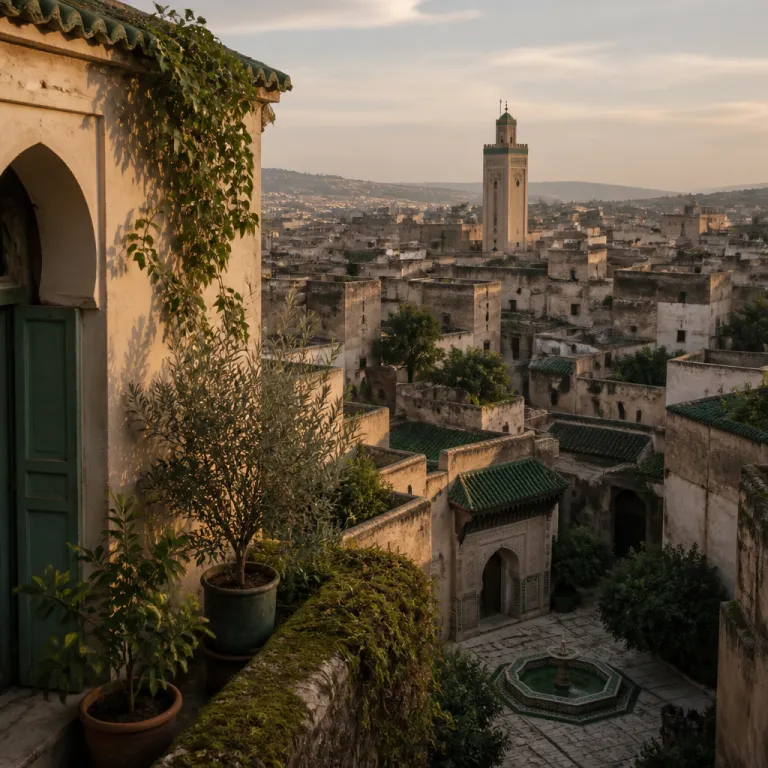
Rethinking the classic Fes cultural itinerary in Morocco
The standard Fes cultural itinerary in Morocco usually starts with a tannery terrace and a sprig of mint. Most travelers leave with the same photos of the Chouara tannery, but little sense of why Fes shaped the intellectual life of Morocco. This itinerary shifts the focus from spectacle to substance and shows how the city will reward a slower, more curious gaze.
Begin at the Blue Gate, or Bab Bou Jeloud, where the medina tightens around you in a matter of steps. From here your day in Fes becomes a layered walk through theology, craftsmanship and quiet courtyards that feel a world away from the usual tour groups. A well planned Morocco itinerary will give Fes at least two or three days, not a rushed stop between Marrakech and Fes on the highway.
For solo travelers, this is where the guide question appears. You can navigate the Fes medina alone using Google Maps, but the app will not tell you which unmarked door hides a fourteenth century madrasa or which alley in medina Fes still houses a family of master brassworkers. A trusted local guide for one initial day in Morocco can transform the rest of your trip.
Why skipping the tanneries reveals the real Fes
The famous leather-dyeing pits are part of Fes, yet they are not its soul. The city’s significance lies in its role as a centre of learning and as a living archive of Moroccan craft, which a standard tannery focused tour rarely explains. When you design a more thoughtful cultural route through Fes, the tannery becomes a footnote rather than the headline.
Walk instead along Tala Kebira, the main spine of the old medina, and you will feel how commerce, scholarship and daily life still overlap. Here, the road narrows into a stream of students, porters and café regulars, and your sense of time begins to slow. This is where you start to find the beautiful tension between past and present that defines any serious cultural journey through Fes.
UNESCO describes the historic centre of Fes as one of the best preserved medieval cities in the world and notes that Al Qarawiyyin has functioned as a university for more than a thousand years. The medina also contains thousands of alleys, often cited in the high four figures, though exact counts vary by source. Those broad numbers matter because they explain why a quick day trip cannot do justice to Fes, and why many visitors feel lost both physically and intellectually. Give yourself several Fes days and the city will slowly reveal patterns that no tannery terrace can offer.
Al Quaraouiyine, madrasas and the intellectual spine of the medina
Any serious Fes cultural itinerary in Morocco starts with Al Quaraouiyine University. Often described by UNESCO and other institutions as the oldest continuously operating educational establishment in the world, it anchors the scholarly identity of Fes in a way that no single tannery ever could. Walking toward it through inside medina lanes, you feel the weight of a thousand years of argument and commentary pressed into the walls.
Non Muslims cannot enter the prayer hall, but you can still visit the complex from the surrounding streets and glimpse its beautiful courtyard through carved doors. Combine this with a visit to the Al Attarine madrasa and the Inania madrasa, and your day in Morocco becomes a study in how theology, geometry and light intersect. These spaces turn a simple tour of Fes medina into an education in Moroccan aesthetics.
The Bou Inania Medersa is the star. Its cedar latticework, green tiled minaret and marble courtyard rival anything in Marrakech, yet the atmosphere is quieter and more contemplative. Many travelers planning a Morocco itinerary compare Marrakech and Fes, but the Bou Inania complex shows how Fes leans toward scholarship rather than spectacle, which matters when you choose where to spend your limited time.
How to structure a madrasa focused day
Start your day at the Blue Gate and walk down Tala Kebira before the crowds. Visit the Bou Inania Medersa first, when the light is soft and the zellige tiles glow, then continue deeper into medina Fes toward Al Attarine and Al Quaraouiyine. This sequence turns a simple visit Fes plan into a coherent narrative about knowledge, power and patronage in pre modern Morocco.
Solo travelers often ask whether they need a guide for this part of the trip. The answer is that a good local guide, especially one recommended by your luxury riad or palace hotel, will unlock epigraphic details and historical anecdotes that no signboard offers. If you prefer independence, use a curated list of unforgettable attractions in Fes for luxury minded travelers as a framework and then let your own cultural route through the city evolve as you wander.
From a hotel booking perspective, staying near Bab Bou Jeloud or in the western part of Fes el Bali shortens your walking time to these sites. Many high end riads in this area offer early breakfasts so you can reach each place before the tour groups. That small logistical choice will shape how intimate your encounters with these beautiful spaces feel.
Artisan quarters, Nejjarine Museum and living craft traditions
Beyond the madrasas, the most rewarding part of any cultural stay in Fes lies in the artisan quarters. Here, the road narrows into workshops where wood, brass, leather and zellige are still shaped by hand, often by families who have worked the same place for generations. This is where the city feels most alive and least curated for a quick day trip.
The Nejjarine Museum of Wooden Arts and Crafts is your anchor. Set in a restored caravanserai, the Nejjarine Museum offers a calm, curated overview of the woodworking traditions you see in the streets, from carved doors to delicate inlay. When you step back outside into inside medina alleys, you will recognise motifs on shopfronts and mosque pulpits that you might otherwise have walked past.
Local artisans still work in clusters throughout Fes el Bali and Fes Jdid, and many belong to cooperatives that welcome respectful visitors. A thoughtful guide will introduce you to workshops where the sales pitch comes after the explanation, not before it. For a deeper dive into these experiences, use this guide to elegant experiences in Fes around the medina’s historic sites as a reference when planning your own cultural programme in the city.
How to approach the tanneries without letting them dominate
It would be artificial to pretend the tannery quarter does not exist. The key is to fold it into your itinerary as one craft among many, not the defining image of Fes. Visit a smaller leather-dyeing complex early in the day, stay briefly, then return to the quieter wood and brass quarters where the Moroccan craft story feels less staged.
When you walk through medina Fes, you will notice how leather goods, brass lamps and carved cedar all share similar geometric logics. That visual continuity is what makes the city such a compelling place for design minded travelers. A well chosen luxury riad often mirrors these details in its own architecture, turning your hotel into an extension of your cultural journey through Fes.
Remember the practical advice shared by local tourism authorities: "Wear comfortable shoes", "Stay hydrated", "Respect local customs". These simple guidelines matter when you spend long hours walking the maze-like alleys of the medina, and they help ensure that your interactions with artisans remain respectful and mutually beneficial. In the end, the most beautiful souvenir from Fes may be the memory of a conversation, not an object.
Eating in Fes and where to stay for a cultural deep dive
Cuisine is another way your Fes cultural itinerary in Morocco can move beyond clichés. Compared with Marrakech, the food in Fes tends to be more restrained and more closely tied to home cooking, with strong Jewish Andalusian influences in dishes like pastilla and slow cooked meats with prunes. You will eat fewer theatrical rooftop dinners and more quietly perfect tagines in tiled courtyards.
Plan at least one day where lunch is your main meal, taken in a traditional house near Tala Kebira or in Fes el Bali, so you can walk off the richness through the medina afterward. In the evening, explore the cafés of Ville Nouvelle, where a different, more contemporary Moroccan Fes appears. This contrast between medina Fes and the newer districts will round out your sense of the city beyond the postcard views.
For accommodation, the most rewarding stays for culture focused travelers are in restored palaces and intimate riads near Bab Bou Jeloud, Fes Jdid or the upper reaches of Tala Kebira. These properties place you within walking distance of the key sites on your Fes cultural itinerary in Morocco, from the Bou Inania Medersa to the Nejjarine Museum. Many will arrange a trusted guide for your first day in Morocco, then step back so you can explore independently.
How luxury hotels frame your experience of the medina
Choosing the right hotel is not just about thread count. In Fes, it is about how your riad or palace mediates between the intensity of inside medina life and the calm you need to process it. A well run property will offer quiet courtyards, attentive but discreet service and staff who understand that a solo traveler’s needs differ from those of a group tour.
Look for hotels that can arrange private transfers along the sometimes chaotic road between Marrakech and Fes, or even suggest a multi stop Morocco itinerary that includes coastal or mountain retreats. For inspiration beyond Fes, our coverage of coastal hotels on Morocco’s northern shore shows how different regions of Morocco reward different styles of stay. The common thread is a focus on properties that feel rooted in their neighbourhoods rather than sealed off from them.
From a practical standpoint, confirm whether your chosen riad offers luggage porters from the nearest road access point, as many streets in Fes el Bali are pedestrian only. Ask for clear arrival instructions that you can load into Google Maps, and keep the property’s phone number handy in case your trip into the medina becomes more labyrinthine than expected. These small details will shape how relaxed you feel when you step back into the streets each morning.
Navigating Fes solo: guides, Google Maps and the rhythm of the day
Walking the Fes medina alone is both exhilarating and disorienting. With thousands of alleys and constant sensory input, the city can overwhelm even experienced travelers on their first day. Yet for many solo visitors, this is precisely what makes a Fes cultural itinerary in Morocco so compelling.
"Is it safe to walk in the medina?" and "Are the madrasas open to non-Muslims?" and "What is the best time to visit Fes?" are questions that appear in almost every pre trip conversation. The answers are reassuring: "Is it safe to walk in the medina?", "Yes, but it's easy to get lost; consider a guide.", "Are the madrasas open to non-Muslims?", "Yes, many are open to visitors.", "What is the best time to visit Fes?", "Spring and autumn offer pleasant weather.". With that in mind, structure your itinerary so that your most complex walks through inside medina streets happen in daylight, when your sense of direction is sharpest.
Google Maps works reasonably well in the main arteries like Tala Kebira, but it struggles in some of the tighter lanes of Fes el Bali and Madinat Fas. Use it as a broad orientation tool rather than a step by step navigator. When in doubt, ask a shopkeeper or café owner for directions to a major landmark such as the Blue Gate, the Bou Inania Medersa or the Nejjarine Museum, and you will usually be set back on the right road.
When a guide is worth the investment
For at least one of your Fes days, hiring a licensed local guide is money well spent. Local guides act as tour leaders and are experts in Fes history and culture, and they are available through reputable agencies or directly via your hotel. Their presence turns a simple tour into a conversation, especially for solo travelers who want context as much as directions.
Use that guided day trip to map your own mental version of medina Fes. Note how long it takes to walk between your riad and key sites, which place feels comfortable to linger in alone, and where you might return at a different time of day. This knowledge will make the rest of your cultural stay in Fes feel less like a maze and more like a neighbourhood.
From a safety perspective, Fes is generally calm for visitors who respect local norms. Dress modestly, avoid flashing valuables and accept that getting a little lost is part of the experience. The reward is a city that, once it starts to make sense, becomes one of the most beautiful urban experiences in Morocco.
Designing a two or three day cultural program in Fes
To make the most of a Fes cultural itinerary in Morocco, think in terms of themes rather than checklists. Two or three Fes days allow you to balance structured visits with unplanned wandering, which is where the city often feels most generous. Below is a framework that works particularly well for solo travelers staying in a central riad.
Day one: orientation and the intellectual spine. Start at the Blue Gate, walk Tala Kebira, visit the Bou Inania Medersa and Al Attarine madrasa, then circle around Al Quaraouiyine. Use a guide if you want deep context, or rely on Google Maps and a printed itinerary if you prefer independence. End the day with tea on a terrace overlooking Fes el Bali.
Day two: crafts, museums and quiet courtyards. Focus on the Nejjarine Museum, artisan quarters and a brief, intentional tannery stop, then cross toward Fes Jdid and the mellah for a different urban texture. In the evening, head to Ville Nouvelle for dinner and a sense of contemporary Moroccan life. This balance between old and new will make your trip feel less like a museum visit and more like time spent in a living city.
Extending your stay and linking Fes to the wider country
If you have a third day in Morocco, use it for a slower pace. Revisit a favourite place in medina Fes, spend an afternoon reading in your riad courtyard, or arrange a short day trip into the surrounding hills. This unscheduled time often yields the most memorable conversations and the clearest sense of how Fes fits into your broader Morocco itinerary.
Many travelers link Marrakech and Fes by train or private car, using Fes as the more introspective counterpoint to Marrakech’s extroversion. Others pair Fes with coastal stays in Tangier or the northern shore, where the rhythm of the road and the Atlantic light offer a different kind of reset. However you connect the dots, let your Fes cultural itinerary in Morocco set the tone for a trip that values depth over breadth.
In the end, skipping the tanneries as the centrepiece of your tour does not mean ignoring them. It means recognising that the true luxury of Fes lies in its layered history, its working medina and its capacity to make you feel both small and somehow at home. Choose your riad well, give the city enough days and it will quietly rearrange how you think about urban Morocco.
Key figures that shape a Fes cultural itinerary
- UNESCO and related studies estimate that the Fes medina contains several thousand alleys, sometimes quoted in the high four figures, which explains why even confident travelers often need a guide or Google Maps during their first day in the city.
- Al Qarawiyyin University in Fes has been operating in some form for more than a millennium, making it a cornerstone of any serious Fes cultural itinerary in Morocco focused on intellectual history.
- Cultural tours in Fes typically run as a full day trip, from around 9:00 to 18:00, which is enough time to visit at least one madrasa, a major museum such as the Nejjarine Museum and several artisan quarters.
- The rise in cultural tourism to Morocco has increased demand for high quality riad stays in Fes el Bali and Fes Jdid, encouraging more careful restorations of historic houses into luxury accommodation.
- Spring and autumn are widely regarded as the best seasons to visit Fes, with milder temperatures that make long walks through medina Fes and along Tala Kebira more comfortable for solo travelers.
FAQ about planning a cultural stay in Fes
What is the best time to visit Fes for a cultural trip ?
Spring and autumn offer pleasant weather, which makes long walks through the medina and extended day long tours of sites like the Bou Inania Medersa and the Nejjarine Museum far more comfortable. These seasons also see a good balance between local life and visitor numbers, so your Fes cultural itinerary in Morocco feels lively but not overcrowded.
Are the madrasas in Fes open to non Muslims ?
Yes, many of the historic madrasas, including the Bou Inania Medersa and Al Attarine, are open to visitors regardless of faith. They function today as architectural and historical monuments rather than active religious schools, which makes them essential stops on any Fes cultural itinerary in Morocco.
Is it safe to walk alone in the Fes medina ?
Walking alone in medina Fes is generally safe, especially during the day, but the sheer number of alleys means it is easy to get lost. Many solo travelers use Google Maps for orientation and hire a guide for at least one day trip to build confidence before exploring independently.
How many days should I spend in Fes on a Morocco itinerary ?
Two to three Fes days are ideal for a culture focused traveler, allowing enough time to visit key sites, wander inside medina streets and still enjoy the calm of your riad. Anything less risks turning your trip into a rushed checklist rather than a meaningful Fes cultural itinerary in Morocco.
Do I need a guide to enjoy Fes, or can I rely on Google Maps ?
You can explore Fes el Bali and Fes Jdid with Google Maps alone, but a licensed guide for at least one day will add historical depth and help you find quieter, more authentic places. Many luxury riads can arrange such guides, which is particularly helpful for solo travelers designing a nuanced Fes cultural itinerary in Morocco.