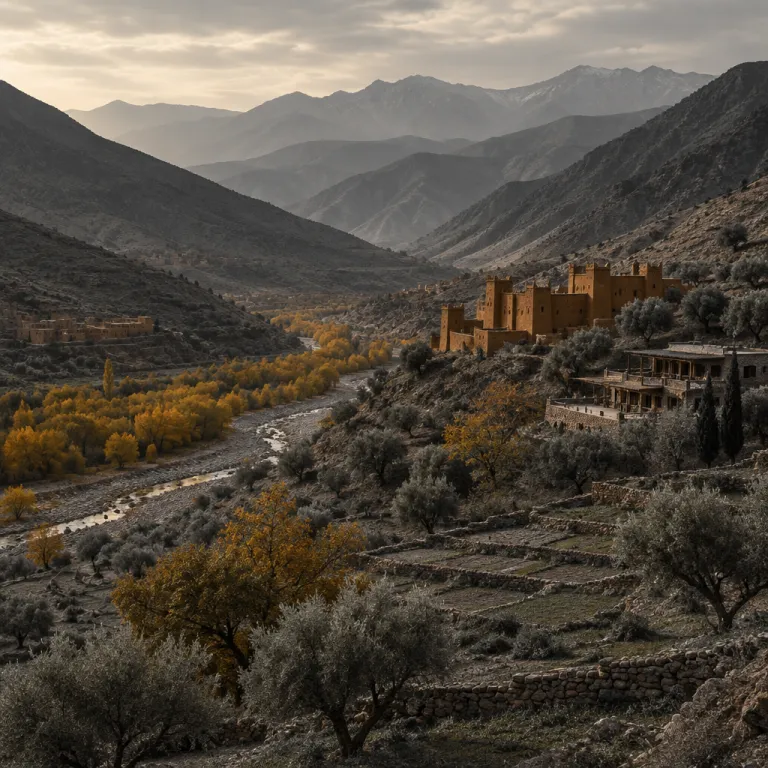
Morocco autumn mountains valleys october: why this is the best time to go
October colour in Morocco feels quietly theatrical in the mountains. During this autumn season, the light softens over the High Atlas and the valleys shift from late summer green to copper orchards, which makes an October escape in Morocco’s mountain valleys a rare sweet spot for couples planning a romantic trip. You move between ochre villages and silver olive groves in just a few days, with daytime temperatures staying comfortable enough for long walks yet cool enough for slow lunches on panoramic terraces.
In the High Atlas, daytime temperatures in early October usually sit between 18 and 24 degrees, while nights in the mountains drop sharply and invite fireplaces, thick wool blankets and long glasses of mint tea. This is the best time for travellers who want to visit Morocco without the intense heat of July and August in the inland cities or the crowds of peak summer on the Atlantic coast, and it is also when the contrast between the green riverbeds and the russet slopes is at its most photogenic. By late October and into November, the weather in the higher Atlas Mountains turns crisper, but the high plateaus around 2,000 metres and the lower valleys remain comfortable for hiking and terrace breakfasts.
Couples often ask about the best time to visit for combining the mountains with the Sahara Desert, and October is again the quiet answer. The Sahara and its desert camps around Merzouga and the Dades Valley begin to cool after the fierce summer season, so you can pair two or three days in the High Atlas with two nights in refined desert camps without battling extreme temperatures. If you are planning a longer trip that includes both Marrakech and Fès, aim your visit for late April to early June or for the shoulder seasons of spring and autumn, but for Morocco’s autumn mountains and valleys in October specifically, the balance of weather, light and harvest makes this month stand out.
Where the colours change first: Ourika, High Atlas and oasis valleys
South of Marrakech, the Ourika Valley is usually the first to show the full drama of Morocco’s autumn mountains and valleys in October. Poplar trees along the river turn a luminous yellow while the terraced fields above the water shift from bright summer greens to muted straw, and the contrast with the red earth of the Atlas Mountains is striking on clear days. Luxury lodges here lean into the season with long lunches under pergolas, where you can watch the weather roll in over the peaks while remaining perfectly comfortable beside a discreet brazier.
Higher up, around Imlil at roughly 1,740 metres and the approaches to Jebel Toubkal, whose summit reaches 4,167 metres, the colours arrive a little later but feel more intense against the bare rock of the High Atlas. This is the best time for couples who want to walk without the snow of late winter or the heat of summer, and many of the most polished mountain retreats now build their itineraries around this walking season in the High Atlas, as explored in depth in our guide to autumn hiking from Marrakech hotels. Around the Dades Valley, the palm groves and small oasis villages turn bronze and gold, and the play of light in the late afternoon makes this one of the best stretches of road in Morocco for photographers.
For travellers planning a Marrakech–Fès itinerary, October and November are ideal months to thread these valleys together. You can start your trip in Marrakech, move through the High Atlas and the Dades Valley, then reach the Sahara Desert for two nights in desert camps before continuing to Fès, all while enjoying manageable daytime temperatures and generally clear weather. Driving times help shape the route: Marrakech to the Ourika Valley takes about an hour, while the journey from Marrakech to Merzouga via the Dades region usually requires around nine to ten hours of driving, so most travellers break it with an overnight stop in the mountains or oasis valleys.
Mountain lodges and valley retreats made for autumn stays
Luxury in Morocco’s autumn mountains and valleys in October is less about chandeliers and more about how a property frames the landscape. In the High Atlas, the most compelling lodges sit just below the snow line, with stone terraces that catch the morning sun and salons where you can watch the weather shift over Jebel Toubkal while a fire burns quietly in the corner. These are places where the best time to be outside is late morning and mid afternoon, when daytime temperatures are gentle and the light is soft enough for long, unhurried walks.
In the Ourika Valley and other accessible valleys near Marrakech, autumn is when the better properties recalibrate from summer pool life to a slower, more contemplative rhythm. You might spend your days walking between small villages, then return to a hammam and a glass of wine on a terrace that overlooks the Atlas Mountains, with the last light catching the orchards below. Families often ask whether spring or autumn is better for these stays, and while late April and spring bring wildflowers, our experience shows that the shoulder seasons can feel less predictable in terms of weather than the stable, clear days of October.
Further east, along the road to the Sahara Desert, the Dades Valley and neighbouring gorges host a growing number of discreet, design-led lodges that come into their own in autumn. Here, October in Morocco’s mountain and oasis landscapes means date palms heavy with fruit, rust coloured cliffs and cool evenings that make courtyard dinners feel intimate rather than chilly, and it is easy to pair a few nights here with a refined Sahara stay by continuing on to Merzouga. For couples who want to understand how these seasons shape the mountains, our detailed piece on late spring in the Atlas offers a useful counterpoint to the autumn experience.
Harvests, light and pairing mountains with the desert in october
Morocco’s autumn mountains and valleys in October are also shaped by harvest time, which quietly transforms the rhythm of rural stays. In the olive groves of the inland cities’ hinterlands and the terraces above Marrakech, you may see families gathering olives by hand from late October into November, while in the oasis valleys the date harvest usually peaks between late September and early November and brings a gentle bustle to otherwise sleepy villages. Many high-end lodges now offer low-key ways to engage with these harvests, from guided walks through working orchards to simple tastings that show how the same fruit changes between spring, summer and autumn.
For photographers, this season is about light as much as colour, and the best time to visit the mountains is often early morning and late afternoon when the sun sits low over the Atlas. The weather tends to be stable in October, with clear skies that give you long views across the High Atlas from terraces above Marrakech and Fès, and the softer light flatters both landscapes and architecture. If you are planning to visit Morocco for serious photography, consider structuring your days around these windows and using the brighter middle of the day for hammams, lunches and slow reading sessions by the fire.
Pairing the mountains with the Sahara Desert works particularly well in this season, because the desert temperatures finally ease after the intensity of July and August. Many couples choose to spend three or four days in the High Atlas before driving east to the Sahara for two or three nights in desert camps, and our curated guide to a desert luxury camp in Merzouga explains how to do this without sacrificing comfort. While the Atlantic coast and the coastal cities remain appealing year round, an October journey through Morocco’s autumn mountains and valleys offers a more textured, quietly luxurious way to feel the passing of time in the landscape.
FAQ
Is october a comfortable month to visit Morocco’s mountains and valleys ?
October is generally a very comfortable month for visiting Morocco’s mountains and valleys, especially for couples who enjoy walking and long terrace lunches. Daytime temperatures in the High Atlas are usually mild, while evenings are cool enough for fireplaces and heavier blankets. This balance makes an October journey through Morocco’s mountain valleys one of the best periods for combining outdoor activity with refined hotel stays.
How does the weather in october compare with march or late april ?
Weather in October is typically more stable than in March or late April, with fewer sudden showers and clearer light in the mountains. March can still feel like late winter at higher altitudes, while late April and spring bring wildflowers but also more variable conditions. For travellers focused on colour, harvests and comfortable daytime temperatures, Morocco’s autumn mountains and valleys in October usually offer the most reliable experience.
Can we combine Marrakech, Fès, the Atlas Mountains and the Sahara Desert in one trip ?
It is entirely feasible to combine Marrakech, Fès, the Atlas Mountains and the Sahara Desert in a single trip, especially in October and November. Many travellers start in Marrakech, cross the High Atlas and the Dades Valley, spend a couple of nights in desert camps near the Sahara, then continue to Fès. This route works year round, but travelling through Morocco’s autumn mountains and valleys in October gives you cooler desert temperatures and more pleasant days in the mountains.
Are autumn colours in Morocco comparable to classic fall foliage destinations ?
Autumn colours in Morocco are more subtle than in classic fall foliage destinations, but the contrast with red earth and stone villages creates a distinctive palette. You will see yellows, golds and soft browns in the orchards and oasis valleys rather than intense reds, and the effect is particularly striking in the High Atlas and the Dades Valley. For many travellers, Morocco’s autumn mountains and valleys in October feel less about spectacle and more about atmosphere and light.
Is it better to stay in one valley or move between several regions ?
Whether you stay in one valley or move between regions depends on how much time you have and how you like to travel. With five to seven days, many couples choose to base themselves in a single High Atlas or Ourika retreat and explore slowly, while longer trips can comfortably link Marrakech, the High Atlas, the Dades Valley and even the Sahara Desert. In every case, travelling through Morocco’s autumn mountains and valleys in October rewards unhurried itineraries that leave space for the changing light and the quiet rhythms of harvest.