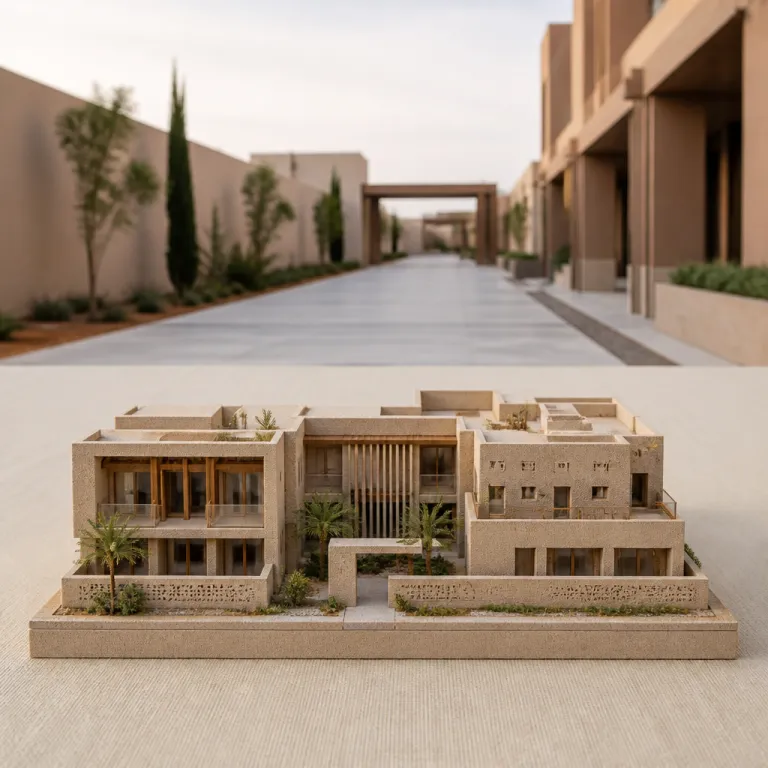
Modern Moroccan hotel design architecture beyond the riad archetype
In Morocco, high-end hospitality design is moving beyond the postcard riad image. A new wave of luxury hotel projects questions whether the courtyard house, the fountain and the carved cedar ceiling should still define what a hotel in Marrakech or Rabat looks like. For design conscious couples, this shift raises a precise question about how much recognisably Moroccan architecture they want, and how much global comfort they expect.
For decades, the default luxury hotel in Morocco has been the restored riad, with traditional Moroccan zellige, tadelakt and mashrabiya screens framing every view. That model still produces extraordinary hotels in Morocco, from intimate medina houses to palace scale conversions such as Royal Mansour, commissioned by King Mohammed VI and opened in 2010, where Moorish architecture, Arabic architecture and Islamic architecture are interpreted with almost obsessive craft. Yet the country’s cities are changing, and so is architecture in Morocco, as new buildings rise on the edges of Marrakech, Rabat and other urban centres across North Africa.
Today’s high-end Moroccan hotel design has to negotiate between local identity and the aesthetic of global brands that operate across the Middle East, Europe and Africa. International architects arrive with a design language honed in other cities, while Moroccan architects push for a style that reflects both the twenty first century and centuries of Islamic architecture, from the great mosque complexes of Fez and Casablanca to quiet neighbourhood mosques. The result is a spectrum of hotel design, from deeply traditional Moroccan to unapologetically contemporary, with many properties trying to balance both worlds.
This tension is not abstract; it shapes how you experience a hotel room, a lobby, a pool terrace lined with palm trees or a spa inspired by a hammam. When you book a luxury hotel in Marrakech today, you are also choosing between different readings of Moroccan architecture and different interpretations of what a Moroccan stay should feel like. Understanding that choice is the first step toward finding a hotel that matches how you want to meet Morocco, whether through carved plaster and courtyards or through glass, concrete and clean lines.
How contemporary architects reinterpret Moroccan forms and materials
Ask any architect working in Morocco and you will hear the same refrain: contemporary hotel architecture here is no longer about copying a nineteenth century riad. Instead, designers explore how to translate the logic of traditional Moroccan houses, mosques and palaces into new buildings that feel honest to this century. They work with local artisans to keep the soul of Moroccan design alive, while adjusting proportions, circulation and light for contemporary travelers.
One of the most interesting shifts is how courtyard thinking appears in hotels that are not riads, especially on larger plots outside the dense medina fabric of Marrakech and other cities. A hotel near Menara Airport or on the road toward the Atlas Mountains might use a series of planted patios, shaded walkways and semi open lounges to echo the privacy and microclimate of a riad courtyard. Instead of enclosing everything, architects open views toward palm trees, distant peaks and the skyline of Marrakech, creating a dialogue between interior Moroccan spaces and the wider landscape of North Africa.
Materials tell another story about architecture in Morocco, and about how Islamic architecture evolves without becoming a stage set. Tadelakt, the polished lime plaster that once coated palace hammams and the walls of a great mosque courtyard, now appears in minimalist bathrooms, spa corridors and even pool decks, where its soft sheen pairs with clean lined design luxury furniture. Zellige tiles might be used as a single band of pattern rather than full surface decoration, while carved cedar and moucharabieh screens filter light in otherwise restrained hotel rooms.
Some of the most thoughtful projects collaborate with practices such as Oualalou Choi, who have worked on cultural buildings and infrastructure across Morocco and the wider Middle East and Africa, including the Moroccan Pavilion at Expo 2020 Dubai. Their approach to architecture Morocco wide often treats Islamic architecture and Moorish architecture as a living language, not a fixed style, which is crucial when designing hotels in Morocco that must feel both rooted and current. If you want to understand how details like zellige or tadelakt separate a great riad inspired property from a tourist trap, it is worth reading this guide on zellige, tadelakt and cedarwood craftsmanship before you book.
Kimpton Marrakech and the rise of lifestyle hotels that skip the courtyard
The clearest sign that hotel design in Morocco is changing comes from the arrival of lifestyle brands that do not follow the riad script. Kimpton Marrakech, a 67 room luxury lifestyle hotel scheduled to open south of the medina in the mid 2020s under IHG’s Kimpton flag, positions itself as a social hub rather than a courtyard centric refuge. Its developer, Sirayane Hospitality, brings long local experience in hotels Morocco wide, yet the concept deliberately avoids the classic riad layout.
Instead of a single inward facing courtyard, Kimpton Marrakech is expected to organise its architecture around a sequence of lounges, restaurants and pool areas that encourage movement and interaction. This reflects a global trend in hotel design, where lobbies become co working spaces and bars double as neighbourhood hangouts, but in Morocco it also signals a shift away from the introspective character of traditional Moroccan houses. For couples used to lifestyle hotels in other cities across Europe, the Middle East or North Africa, this format will feel familiar, even if the materials and colours nod to Moroccan design.
The question is whether such a hotel in Marrakech can still offer a strong sense of place without leaning heavily on Moroccan architecture tropes. Some cues are almost inevitable: references to Islamic architecture in arch profiles, a hint of Moorish architecture in courtyard planting, perhaps an interior Moroccan palette of terracotta, palm green and brass. Yet the overall composition may feel closer to a contemporary resort near Menara Airport than to a medina riad, which will appeal to travelers who prefer space, light and clear wayfinding over labyrinthine charm.
If you are weighing Kimpton Marrakech or similar properties against a restored riad or palace hotel, it helps to understand what a riad really is and how it shapes your stay. A riad is a traditional Moroccan house centered around an interior courtyard. For a deeper dive into that typology and how to choose between different riads in Marrakech or other cities, read this detailed guide on what a riad in Morocco really is. Only then can you decide whether a lifestyle luxury hotel that does not look like a riad is a gain in comfort or a loss of atmosphere for your particular trip.
Where old and new meet: from Royal Mansour to IZZA and Nuru
Not every modern Moroccan hotel rejects the riad language; some of the most compelling properties use contemporary hospitality architecture to edit and refine it. Royal Mansour in Marrakech remains the reference point, a palace scale project that recreates an entire medina of interconnected riads, lanes and courtyards with almost surreal craftsmanship. Here, Moroccan architecture, Islamic architecture and Moorish architecture are deployed at full volume, yet the planning, services and comfort levels quietly match any contemporary luxury hotel in Africa or the Middle East.
At a more intimate scale, IZZA Hotel in the Marrakech medina combines traditional Moroccan architecture with modern design in a way that feels both curated and lived in. Its rooms and public spaces use interior Moroccan elements such as tadelakt, zellige and carved wood, but the furniture and art lean toward a restrained, almost art deco inspired style, with pieces by contemporary Moroccan and international artists. Nuru Marrakesh follows a similar path, blending timeless Moroccan design with modern luxury, which shows how architects and hoteliers can respect traditional Moroccan forms while still speaking to travelers who value clean lines and thoughtful lighting.
These properties sit within a broader movement in architecture Morocco wide, where new hotels in Marrakech and other cities experiment with different balances of heritage and innovation. Some projects near the Atlas Mountains reinterpret the kasbah as a low slung complex of stone buildings, while coastal hotels in North Africa might reference the whitewashed volumes of Arabic architecture rather than the dense ornament of a palace. Across this spectrum, the best design luxury experiences feel specific to Morocco, even when the architecture is stripped back and the palette is minimal.
For couples choosing between these options, the key is to read the architectural intent as carefully as you read the room descriptions. Look for whether architects and owners mention collaboration with local artisans, or whether the language is purely about global lifestyle branding and generic luxury. If you want help navigating the clichés that often surround Morocco, architecture and hospitality, this essay on avoiding the orientalist trap when recommending Morocco offers a useful lens for judging whether a hotel’s design feels respectful or merely decorative.
How to choose between a riad and a contemporary luxury hotel
When you plan a romantic trip to Morocco, the choice between a riad and a contemporary luxury hotel is not just about architecture; it is about how you want to feel at different moments of your stay. A traditional Moroccan riad in Marrakech or another historic city offers intimacy, layered soundscapes and a direct connection to Moroccan architecture, from carved plaster to the geometry of Islamic architecture. A modern hotel, by contrast, often offers clearer layouts, larger rooms and amenities that align with international expectations, especially in new districts near Menara Airport or on the road to the Atlas Mountains.
For couples who value privacy and immersion, a riad or riad inspired palace can be ideal, especially if you are comfortable navigating narrow streets and the sensory intensity of medina life. You wake to the call to prayer from a nearby mosque, step out past palm trees in the courtyard and return at night to a quiet roof terrace, where the city hums below. The best examples, whether in Marrakech, Rabat or other cities, use interior Moroccan design to frame that experience, with tadelakt walls, zellige floors and textiles that echo the colours of North Africa.
If you prefer a calmer arrival, easy car access and a more predictable sense of space, a contemporary luxury hotel may suit you better. Properties like Kimpton Marrakech or other design forward hotels in Morocco often sit outside the densest urban fabric, which means larger pools, gardens and views toward the Atlas Mountains or city skylines. Their architecture might reference Moroccan design through materials or art, but the planning and services follow a global model that many travelers from the United States or Europe will recognise instantly.
There is no single right answer; the best trips often combine both typologies, with a few nights in a medina riad followed by time in a modern resort or city hotel. What matters is that you choose consciously, understanding how evolving Moroccan hotel design shapes your sense of place, your daily rhythms and even your relationship to the streets outside. As one practical reminder from local tourism guidance puts it, “Why are modern designs being incorporated into Moroccan hotels? To attract contemporary travelers while preserving cultural heritage.”
Sense of place, not pastiche: what design conscious couples should look for
Whether you stay in Marrakech, Rabat or smaller Moroccan cities, the most rewarding hotels share one quality; they feel anchored to their surroundings rather than airlifted from another continent. In the context of new Moroccan hotel architecture, this means more than hanging a few lanterns or adding a strip of zellige behind the bar. It means that architects and owners think carefully about how the building relates to nearby streets, mosques, palaces and everyday buildings, and how interior Moroccan spaces frame views of palm trees, courtyards or the distant Atlas Mountains.
For couples, a useful test is to ask whether the hotel could be anywhere, or whether it could only be in Morocco, and ideally only in that specific city or neighbourhood. A property near the great mosque of a historic quarter might subtly echo the proportions of its minaret or the rhythm of its arcades, without copying them, while a coastal hotel in North Africa might draw on Arabic architecture in its massing and light handling. Even a thoroughly contemporary hotel in Marrakech can reference Moroccan architecture through its handling of shade, thresholds and transitions between public and private spaces.
Pay attention to how the hotel talks about its design luxury credentials on its website or booking pages. Do they name the architects, perhaps a Moroccan practice or a firm like Oualalou Choi that has worked on significant architecture Morocco wide, or do they rely on vague phrases about exotic style and oriental charm? Do they mention collaboration with local artisans, or reference specific crafts such as tadelakt, zellige or carved cedar, which connect the building to centuries of Islamic architecture and Moorish architecture across Africa and the Middle East.
Finally, remember that a hotel is not a museum piece; it is a place where you sleep, swim, argue, make up and plan the next day’s walk through the medina or along the corniche. The best contemporary Moroccan hotel design supports those intimate moments with spaces that feel both generous and grounded, whether you are in a palace scale property like Royal Mansour or a smaller design forward hotel on the edge of Marrakech. If a new Moroccan hotel does not look like a riad but still gives you a clear sense of where you are, then the evolution of Moroccan architecture in hospitality is working exactly as it should.
FAQ: modern Moroccan hotel design architecture for travelers
What is a riad and how is it different from a modern hotel?
A riad is a traditional Moroccan house centered around an interior courtyard, usually with rooms arranged around the perimeter and windows facing inward. Modern hotels in Morocco often use double loaded corridors, larger lobbies and outward facing windows, which changes how light, sound and privacy work. For travelers, this means riads feel more intimate and enclosed, while contemporary hotels tend to feel more open and resort like.
Do modern hotels in Morocco still reflect local architecture and culture?
Many new hotels in Morocco deliberately integrate elements of Moroccan architecture, Islamic architecture and Moorish architecture, even when their overall form is contemporary. You might see tadelakt walls, zellige tiles, carved wood screens or references to nearby mosques and palaces in the proportions and detailing. The depth of that integration varies, so it is worth reading design descriptions carefully and looking for mentions of local architects and artisans.
How should couples choose between staying in a riad or a contemporary luxury hotel?
Couples who prioritise immersion in medina life, atmospheric courtyards and close contact with traditional Moroccan design often prefer riads. Those who value easy access by car, larger pools, more predictable layouts and amenities aligned with international luxury standards may lean toward contemporary hotels. A balanced itinerary can combine both, starting with a riad in Marrakech or another historic city, then moving to a modern resort near the Atlas Mountains or the coast.
Are lifestyle hotels like Kimpton Marrakech a good option for first time visitors?
Lifestyle hotels such as Kimpton Marrakech can work well for first time visitors who want a familiar level of service and social energy while still being close to the city. Their architecture usually feels more global, but they often incorporate Moroccan materials, colours and art to maintain a sense of place. If you pair such a stay with time in a more traditional property, you can experience both sides of contemporary Moroccan hotel design.
Why are more modern designs appearing in Moroccan hotels now?
The rise of modern designs in Moroccan hotels reflects evolving traveler expectations, increased international investment and the ambitions of local architects. New projects aim to attract contemporary guests while still honouring cultural heritage through materials, craft and references to historic buildings such as mosques and palaces. This shift allows Morocco to compete with other destinations in North Africa and the Middle East, while refining how Moroccan architecture appears in hospitality.